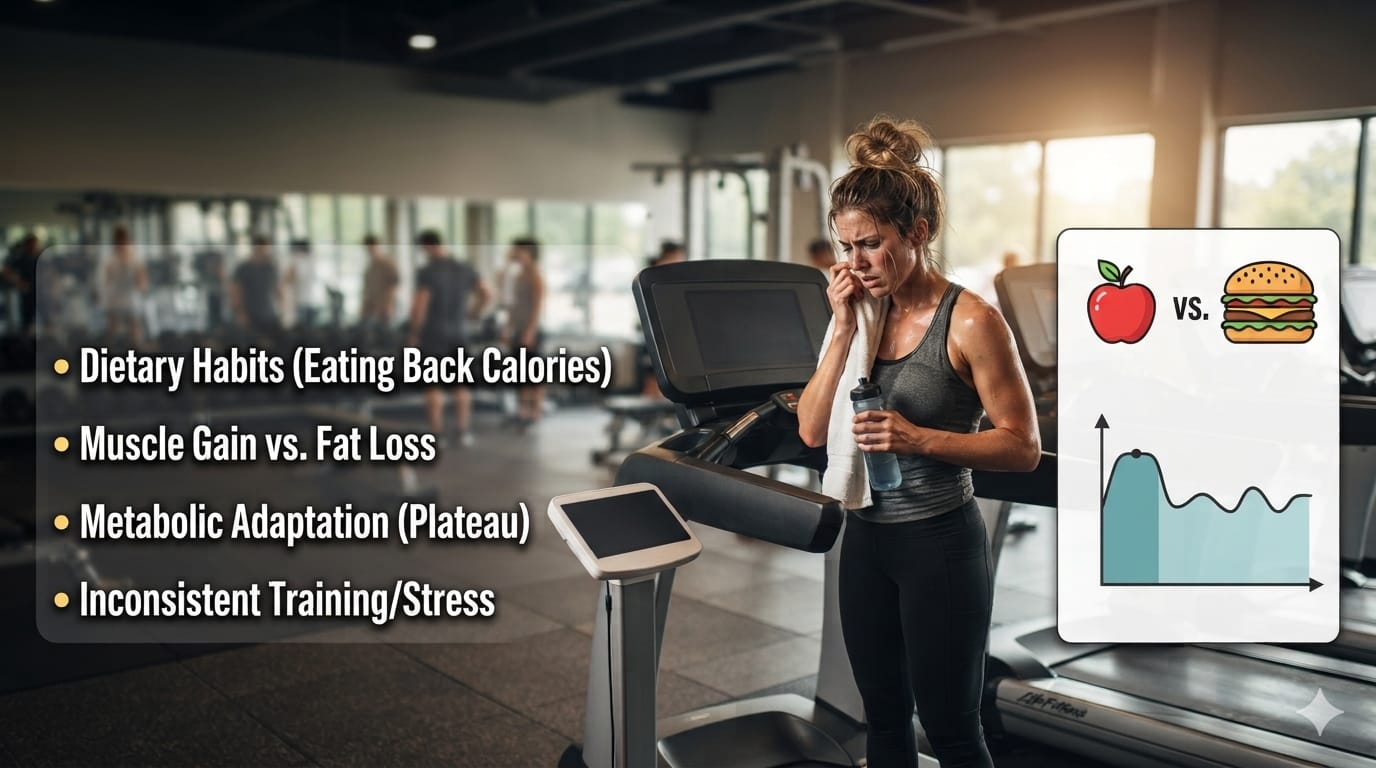

You have started exercising regularly, you are putting in the effort, and yet the number on the scale does not seem to change. Naturally, this can leave you wondering, “Why am I not losing weight after working out?”
The good news is that a lack of immediate change on the scale does not automatically mean that your exercise routine is ineffective. Body weight can change from day to day because of normal fluctuations in body water, digestion, hormones, activity levels, and other factors. Starting a new exercise routine can also lead to changes in muscle and fluid levels that may temporarily make the scale difficult to interpret.
For this reason, no weight loss after exercise should not be judged from only a few days or weeks of scale readings. Your overall health, fitness, strength, energy, sleep, and how consistently you are able to stay active are also important parts of progress.
If you are not losing weight after exercise, there may be several explanations. Your body weight can fluctuate naturally, and exercise can change muscle and fluid levels. Other factors such as eating patterns, everyday movement, sleep, stress, medications, hormones, and certain health conditions can also influence body weight.
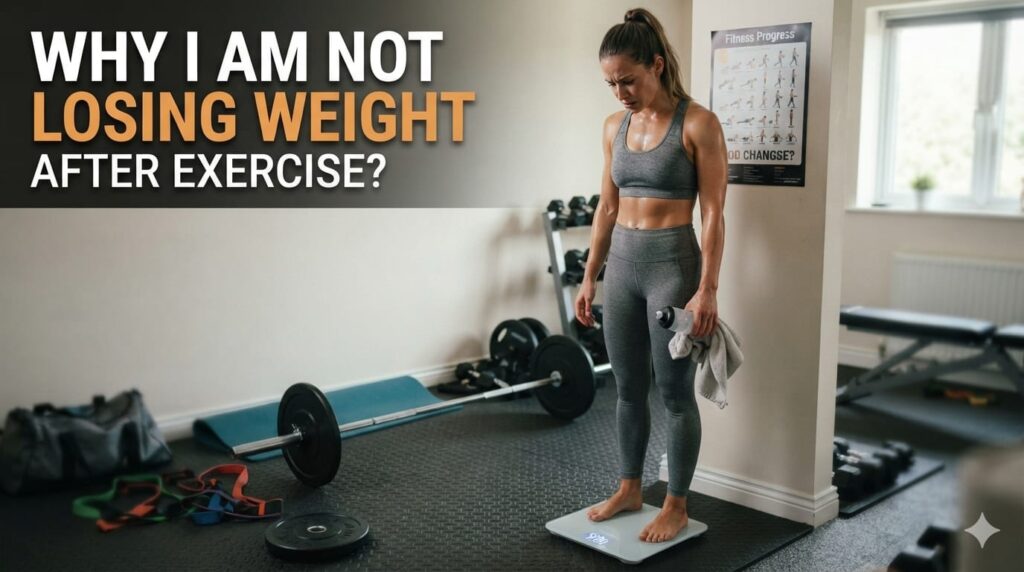
If you have experienced no weight loss after 2 weeks of exercise or no weight loss after 3 weeks of exercise, it is usually too early to conclude that your efforts are not helping. Instead of trying to exercise excessively or drastically changing your diet, focus on healthy, sustainable habits and speak with a healthcare professional if you are concerned.
- The number on the scale does not always reflect changes in fitness or overall health.
- Water retention and normal body fluctuations can temporarily affect weight.
- Starting exercise can lead to changes in muscle and body composition.
- Sleep, stress, eating patterns, daily activity, medications, and health conditions can influence weight.
- No weight loss after 3 weeks of exercise does not necessarily mean something is wrong.
- Avoid extreme exercise or restrictive eating in an attempt to force faster changes.
- If you have ongoing concerns about your weight or health, talk with a healthcare professional.
There is no single reason why the scale may not be changing even when you are exercising regularly. Your body is constantly adjusting to changes in activity, food, sleep, stress, and everyday movement, so the results are not always easy to see right away.
Exercise also has benefits that cannot be measured by body weight alone. You may be getting stronger, building better stamina, sleeping more comfortably, or finding everyday activities easier. These are all signs that your body is responding to regular physical activity.
Your weight naturally fluctuates
Body weight can move up and down from one day to the next. Hydration, food and fluid intake, digestion, hormones, and normal changes in your body can all affect the number you see on the scale.
When you start a new exercise routine, temporary changes in fluid levels can make these fluctuations more noticeable. So, seeing the same number for a few days does not necessarily mean that nothing is happening.
Exercise can change muscle and body composition
If your routine includes strength-based activities, your muscles can become stronger and develop over time. That can mean your body is changing even when your total weight stays fairly similar.
This is one reason it is better not to judge all of your progress by the scale. Improvements in strength, stamina, movement, and fitness can be just as meaningful.
A few weeks may not tell the whole story
It is understandable to feel disappointed when you see no weight loss after 2 weeks of exercise or no weight loss after 3 weeks of exercise. But a few weeks is a fairly short period, and normal changes in body water can make progress difficult to notice.
Everyone responds to exercise differently. Instead of expecting your weight to change on a fixed schedule, give your body time to adjust and pay attention to other signs of progress as well.
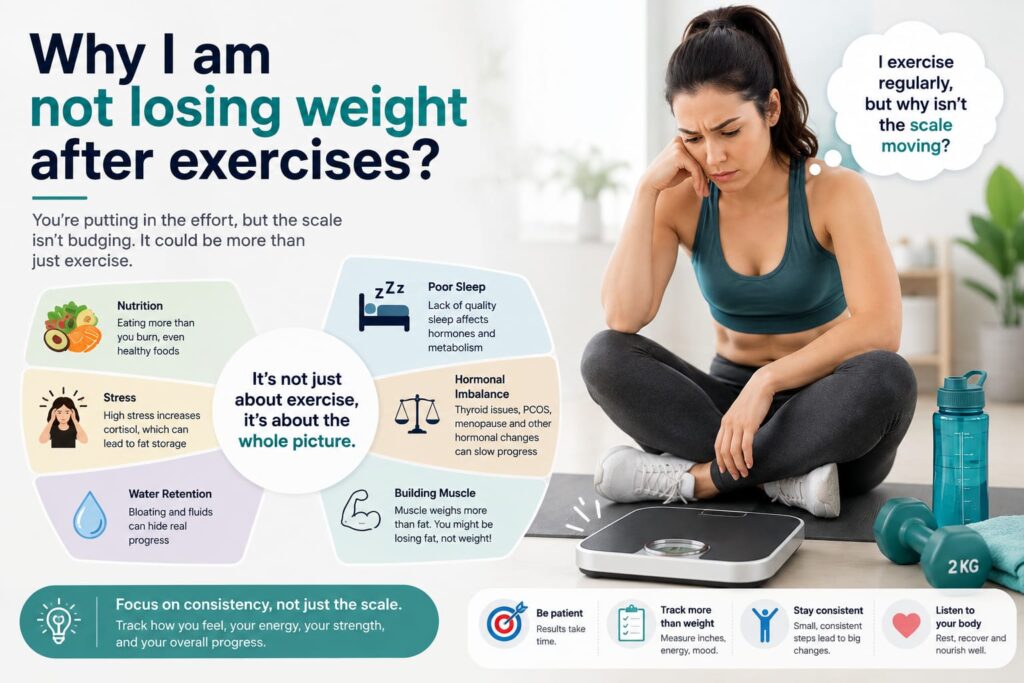
Why the Scale May Not Be Changing
Water changes can mask other changes
Changes in body water can affect your weight even when there have been other changes happening in the background. After exercise, your body may temporarily hold or lose more fluid, which can make the scale move in ways that are hard to interpret.
Your daily activity may have changed
A workout is only one part of your day. What you do before and after exercise also affects how active you are overall.
For instance, you might finish a workout feeling tired and spend more time sitting or resting afterward. Your everyday movement can also change depending on school, work, travel, hobbies, or simply how energetic you feel that day.
Looking at your overall routine gives a better picture than focusing on one workout alone.
Sleep can affect your health and routine
Sleep gives your body time to recover and can affect your energy, mood, concentration, and ability to stay active during the day. When sleep is poor, keeping up with regular healthy habits can become harder.
That is why recovery should be treated as part of an exercise routine, not as something you have to sacrifice in order to make faster progress.
Stress may influence your habits
Stress can affect several parts of your routine, including sleep, appetite, energy, and motivation. During stressful periods, you may find it harder to exercise regularly or maintain your usual eating and sleeping habits.
Making time for rest, relaxation, and activities that help you manage everyday stress can support your overall well-being.
Some medications or medical conditions can affect weight
Some medicines and health conditions can influence body weight. This does not mean that a lack of weight change is automatically a sign of a medical problem, but it is worth discussing with a healthcare professional if you are concerned.
If you are active and still notice unexplained changes in your weight or other symptoms, a doctor can look at your overall health and decide whether you need any further evaluation.
How Exercise Affects the Body
Exercise does much more than affect body weight. Regular physical activity can help improve cardiovascular fitness, muscle strength, coordination, bone health, mood, sleep, and everyday physical function.
So, if the scale has not changed, that does not mean your workouts have been pointless. Your body may be getting fitter and stronger in ways that are not immediately visible.
You may notice things such as:
- Everyday activities feel easier.
- Your stamina has improved.
- You are becoming stronger.
- Your fitness level is improving.
- Your sleep or energy feels better.
- You feel more comfortable being physically active.
These improvements are worth paying attention to, even if your weight has stayed around the same number.
Benefits of Regular Exercise
Regular physical activity offers benefits that go well beyond changes in weight. Staying active can support several areas of physical and mental well-being.
It can help support:
- Heart and lung health
- Muscle strength
- Bone health
- Mobility and coordination
- Energy and stamina
- Mood and mental well-being
- Sleep quality
- Overall physical fitness
For young people in particular, physical activity should be about supporting healthy growth, development, strength, fitness, and overall well-being rather than making body weight the main goal.
How to Use / Practical Tips
If you are exercising regularly and asking yourself, “Why am I not losing weight after working out?”, try not to respond by suddenly making your workouts much harder.
A more helpful approach is to build habits that fit comfortably into your everyday life and that you can keep up over time.
Choose activities you enjoy
Walking, cycling, swimming, sports, dancing, or other age-appropriate activities can all help you stay active. You do not have to choose an activity simply because it is considered the “best” workout.
Finding something you genuinely enjoy can make regular activity feel more natural and easier to maintain.
Give your body time to recover
Rest is part of being active. Your body needs time to recover after physical activity, and exercising harder every day is not necessarily a better approach.
Pay attention to how you feel and allow enough recovery instead of treating tiredness as a reason to push yourself even more.
Eat regular, balanced meals
Rather than skipping meals or following restrictive diets, aim for regular meals and a variety of nutritious foods that suit your age and individual needs.
If you have questions about nutrition or body weight, a parent, guardian, doctor, or registered dietitian can help you choose an approach that is appropriate for you.
Focus on fitness instead of the scale
Strength, stamina, energy, sleep, and how you feel during everyday activities can tell you a lot about your progress. The scale is only one measure, and it cannot show every positive change taking place in your body.
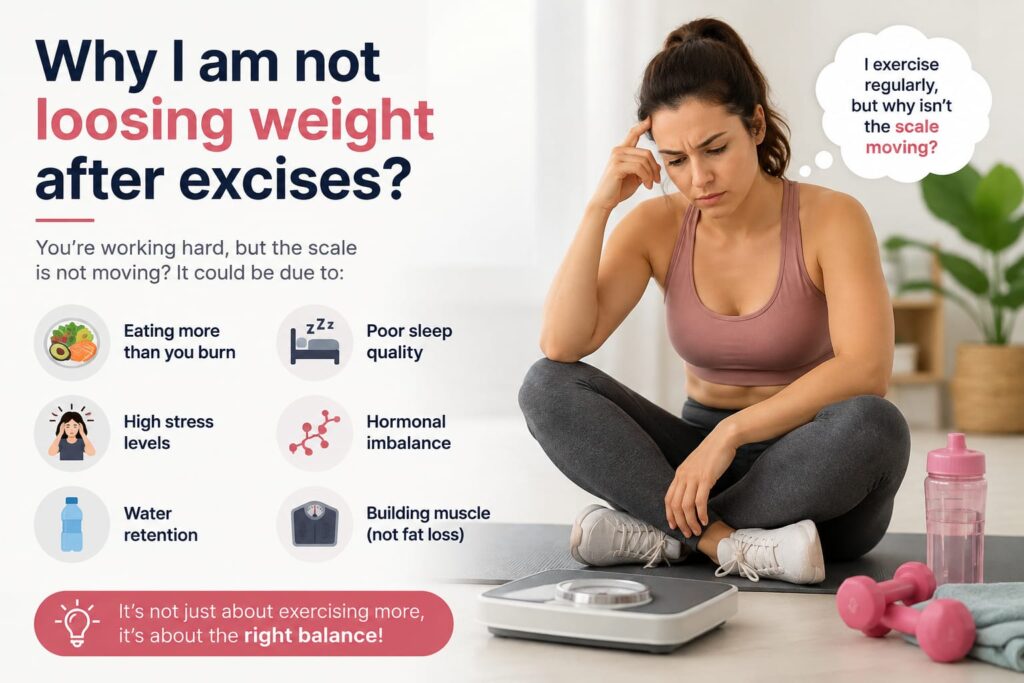
Side Effects / Precautions
Exercise is generally beneficial, but doing too much without enough recovery can leave you very tired, sore, or unable to perform normally.
Try not to respond to a lack of change on the scale by exercising excessively or significantly restricting food. These approaches can put unnecessary stress on your body.
If exercise is causing persistent pain, dizziness, fainting, unusual exhaustion, or other concerning symptoms, stop and tell a trusted adult and seek appropriate medical advice.
When to See a Doctor
If you are worried about your weight or notice changes in your body that concern you, talking to a healthcare professional is a better option than trying increasingly strict diets or exercise routines on your own.
It is especially worth seeking medical advice if weight changes happen along with other ongoing symptoms, changes in normal development, significant fatigue, changes in appetite, or other health concerns.
A doctor can look at your age, growth and development, medical history, medications, activity level, nutrition, and other factors before deciding whether anything needs further evaluation.
Frequently Asked Questions
Why am I not losing weight after working out?
There are many possible reasons. Normal fluctuations in body water, changes in muscle, eating patterns, sleep, stress, daily activity, medications, and health conditions can all influence body weight. The scale also does not measure fitness or overall health by itself.
Is no weight loss after 2 weeks of exercise normal?
A lack of change after two weeks does not necessarily mean that exercise is not helping. Two weeks is a relatively short period, and normal fluctuations can make changes difficult to see.
Why is there no weight loss after 3 weeks of exercise?
No weight loss after 3 weeks of exercise can happen for several reasons, including normal fluid changes and changes in muscle. It is better to look at overall health and fitness rather than assuming that the scale must change within a specific number of weeks.
What if I have been exercising for a month and have no weight loss?
If you have been exercising for a month and are concerned about your weight, avoid responding by exercising excessively or restricting food. Consider discussing your concerns with a healthcare professional who can assess your individual situation.
Why is there no weight loss after 3 weeks of exercise for females?
For females, normal hormonal changes can affect fluid levels and cause temporary fluctuations in body weight. This means the scale may not always provide a clear picture of what is happening in the body.
Can exercise make you gain weight temporarily?
Yes. Exercise can be associated with temporary changes in body water, and strength training can contribute to changes in muscle. A short-term change on the scale does not necessarily indicate an increase in body fat.
Should I exercise more if I am not losing weight?
Not necessarily. More exercise is not always better. A balanced routine that includes appropriate activity, recovery, nutrition, and sleep is more appropriate than trying to force rapid changes.
Conclusion
No weight loss after exercise, especially over only two or three weeks, does not automatically mean that your routine is unsuccessful. Exercise can improve strength, fitness, energy, sleep, and overall health even when body weight does not immediately change.
Instead of trying to force the scale to move through extreme exercise or restrictive eating, focus on healthy habits and give your body appropriate time to adapt. If you remain concerned about your weight, growth, development, or overall health, speak with a healthcare professional for personalized guidance.
Read more:
Collagen Benefits for Men: A Comprehensive Guide.
Menopause and Joint Pain: Causes and Treatments.
Author
Monali Singh is a health content researcher who writes about wellness, dental care, and nutrition. She focuses on simplifying complex health topics for everyday readers.