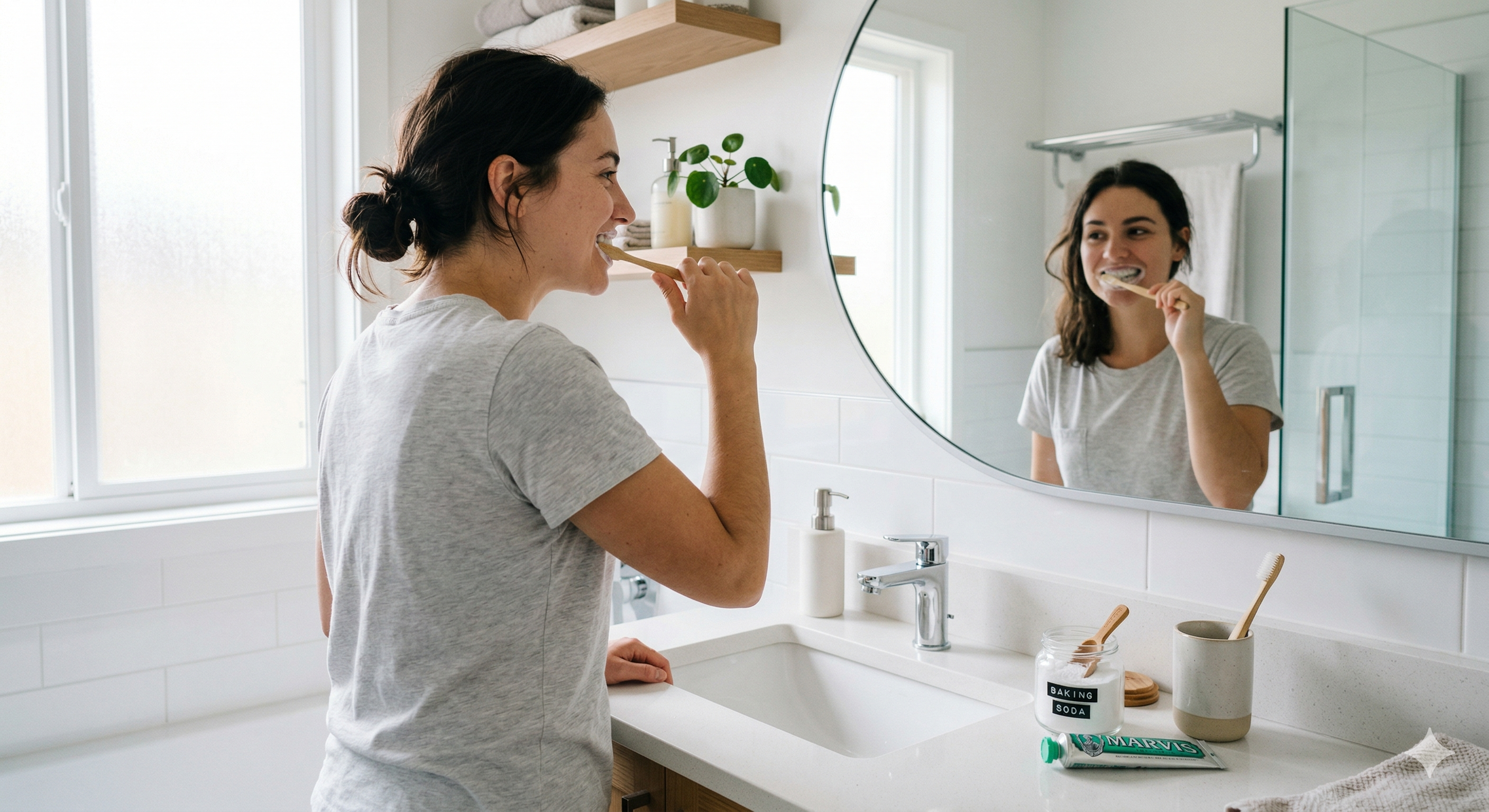

Plaque is one of those dental problems that can seem harmless because it starts as a thin, sticky film on the teeth. The problem is that plaque contains bacteria, and if it is not removed regularly, it can contribute to cavities and gum disease.
The good news is that soft dental plaque can be controlled at home with consistent brushing and cleaning between the teeth. The important distinction is that plaque and tartar are not the same thing. Once plaque hardens into tartar or calculus, brushing alone cannot remove it effectively.
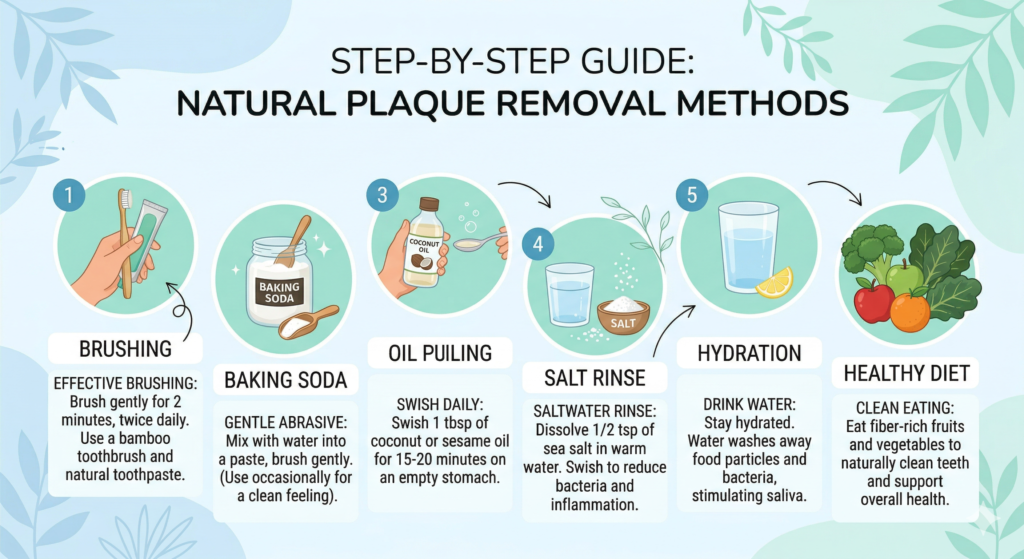
What Is Plaque and Why Does It Build Up?
Plaque is a sticky film of bacteria that forms continuously on your teeth. It can accumulate around the gumline and between teeth, especially when food debris remains in areas that are difficult to clean.
If plaque is not removed thoroughly, it can contribute to tooth decay and gum inflammation. Regular brushing and interdental cleaning are therefore more important than trying to find one powerful “natural plaque remover.”
What happens if plaque is left on the teeth?
Over time, plaque can harden into tartar. Once tartar forms, the surface becomes rougher and can make further plaque accumulation easier.
Tartar around the gumline can contribute to swollen or bleeding gums and is associated with gingivitis and more advanced gum disease.
Can You Remove Plaque Naturally at Home?
Yes, soft plaque can be removed at home with proper daily oral hygiene.
The most effective approach is not a homemade chemical or abrasive treatment. It is regular brushing with fluoride toothpaste combined with cleaning between the teeth. These habits physically disrupt and remove plaque before it has the opportunity to harden.
Can brushing remove plaque?
Yes, Brushing twice a day helps remove plaque from tooth surfaces and around the gumline.
The ADA recommends brushing twice daily for about two minutes with a soft-bristled toothbrush and fluoride toothpaste. Gentle short strokes around the gumline can help clean areas where plaque commonly accumulates.
Can flossing remove plaque?
Yes, Floss and other interdental cleaners help remove plaque and food debris from between teeth where toothbrush bristles cannot reach effectively.
Cleaning between the teeth once a day is an important part of plaque control. Water flossers and interdental brushes can also be useful options for people who find traditional floss difficult to use.
Can You Remove Hardened Plaque at Home?
If by “hardened plaque” you mean tartar or calculus, the answer is generally no.
Tartar is mineralized plaque that becomes firmly attached to the teeth. Brushing and flossing are excellent for preventing new buildup, but they are not a reliable way to remove established tartar.
The ADA states that tartar can only be removed through professional cleaning.
Should you scrape tartar off your teeth yourself?
It is better not to use sharp objects or aggressive scraping methods at home.
Trying to physically chip away hardened deposits can injure the gums or damage the tooth surface without addressing deposits below the gumline. Professional dental cleaning is designed to remove plaque and calculus safely.
What Are the Best Natural Ways to Reduce Plaque Buildup?
There are several simple habits that can naturally reduce plaque buildup without relying on harsh homemade mixtures.
Brush twice a day
Consistent brushing is the foundation of plaque control. Use a soft-bristled toothbrush and fluoride toothpaste, and spend enough time cleaning all tooth surfaces rather than focusing only on the front teeth.
Clean between your teeth every day
Plaque can remain between teeth even when the visible tooth surfaces look clean.
Use floss, interdental brushes or another suitable interdental cleaner once a day. The best option depends on the spacing between your teeth and your individual dental needs.
Reduce frequent sugary snacks and drinks
Plaque bacteria can use sugars from food and drinks to produce acids that damage tooth enamel.
Reducing frequent exposure to sugary foods and drinks can therefore support both plaque control and cavity prevention.
Do Natural Plaque Removers Actually Work?
Many home remedies are promoted online as “natural plaque removers,” but natural does not automatically mean effective or safe.
The main goal should be physically removing plaque rather than trying to dissolve it with harsh substances. Some abrasive or acidic homemade methods may irritate the gums or damage tooth enamel if used improperly.
A consistent brushing and interdental-cleaning routine has much stronger support than relying on an internet remedy to dissolve plaque.
Can baking soda, lemon or vinegar remove plaque?
It is not a good idea to rely on acidic household ingredients such as lemon or vinegar to clean your teeth.
Acid can contribute to enamel erosion, while overly abrasive cleaning methods can wear dental surfaces. Plaque is better managed through regular brushing, fluoride toothpaste and interdental cleaning.
When Do You Need Professional Dental Cleaning?
Professional cleaning becomes particularly important when tartar has already formed or when there are signs of gum disease.
How do you know you may have tartar?
Tartar may appear as a hard, rough or crusty deposit around the gumline. You may also notice persistent staining, bad breath, swollen gums or bleeding when brushing.
Because tartar cannot be effectively removed with ordinary brushing, a dentist or dental hygienist may need to remove it professionally.
What happens during professional cleaning?
A dental professional can remove plaque and hardened tartar from above and, when necessary, below the gumline.
For people with gum disease, deeper cleaning such as scaling and root planing may be recommended to clean affected areas and help control the disease.
How Can You Prevent Plaque From Coming Back?
Plaque naturally forms again after it has been removed, so prevention is an ongoing routine rather than a one-time treatment.
Brush twice a day, clean between your teeth daily, use fluoride toothpaste, limit frequent sugary snacks and drinks, and keep regular dental appointments.
The goal is not to keep your teeth completely free of bacteria—which is unrealistic—but to consistently control the plaque buildup that can contribute to cavities and gum disease.
Frequently Asked Questions
Can brushing remove plaque?
Yes, Regular brushing can remove soft plaque from many tooth surfaces. However, brushing alone cannot effectively clean every space between the teeth, which is why daily interdental cleaning is also recommended.
Can you remove hardened plaque at home?
If hardened plaque means tartar or calculus, it generally requires professional dental cleaning. Brushing and flossing help prevent new buildup but do not reliably remove established tartar.
What is the best natural plaque remover?
The most useful “natural” approach is consistent physical plaque removal: brushing twice daily and cleaning between the teeth every day. There is no need for an aggressive homemade substance to replace basic oral hygiene.
Can flossing remove plaque between teeth?
Yes, Floss and other interdental cleaners can remove plaque and trapped food from areas that toothbrush bristles cannot reach effectively.
Does tartar go away if you brush more?
Not usually. Better brushing can help prevent additional plaque from accumulating, but established tartar is hardened and requires professional removal.
How often should you get a professional cleaning?
The appropriate interval depends on your oral health and risk factors. People with gum disease or significant tartar buildup may need professional care more frequently than someone with healthy gums. Your dentist or hygienist can recommend the appropriate schedule.
You may also read:
How Many Teeth Do Humans Have
Home Remedies for Swollen Gums
Conclusion
Soft plaque can be managed effectively at home, but the key is consistency rather than searching for a powerful homemade plaque remover. Brushing twice daily with fluoride toothpaste and cleaning between the teeth every day are the foundation of good plaque control.
Once plaque hardens into tartar, however, the situation changes. Tartar cannot be reliably removed with ordinary brushing or home scraping and may require professional dental cleaning.
So if your goal is to remove plaque naturally at home, focus on the habits that actually prevent buildup: brush, clean between your teeth, limit frequent sugar exposure, and maintain regular dental care.
Author
Monali Singh is a health content researcher who writes about wellness, dental care, and nutrition. She focuses on simplifying complex health topics for everyday readers.