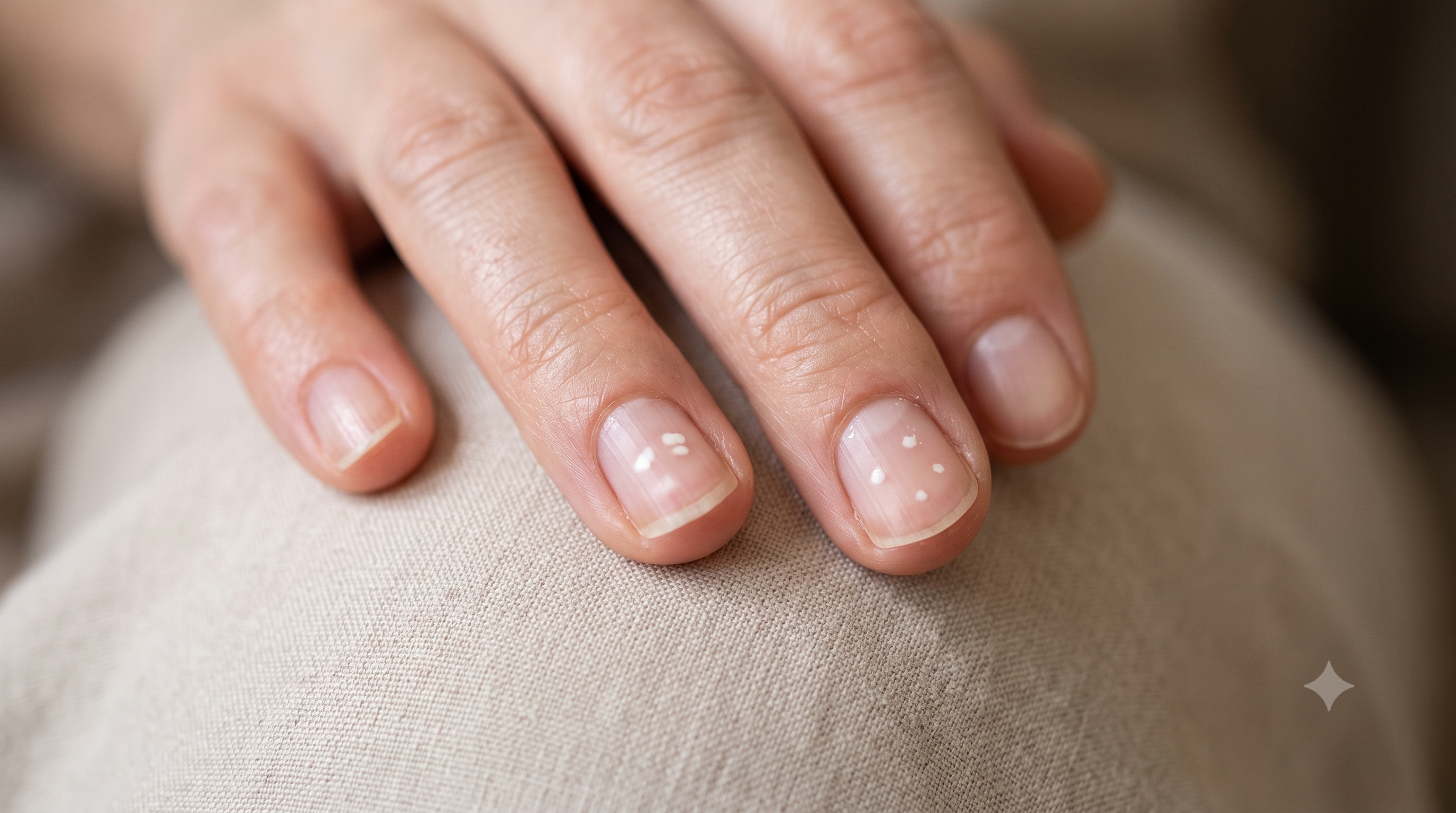

White spots on nails are something many people notice at some point, often without knowing where they came from. You may see a small white dot on one fingernail and wonder if it means you are lacking calcium or another nutrient. In most cases, however, a small white spot is much less concerning than it may appear.
Minor injury to the nail is one of the common reasons these marks develop. The nail can be affected by something as simple as biting or picking at it, hitting the nail, or having a rough manicure. Because nails grow gradually, the white mark may not become noticeable until weeks after the original damage occurred.
That said, white spots on nails can have several possible causes. Nail products, fungal infections, skin conditions, and, less commonly, certain health or nutritional problems can also be associated with changes in nail color or appearance.
Understanding the difference between a harmless white spot and a nail change that needs attention can help you avoid unnecessary treatments while knowing when it is worth speaking with a healthcare professional.
What Are White Spots on Nails, and Why Do They Appear?
White spots are areas of the nail that look lighter or completely white compared with the surrounding nail. They can appear on fingernails or toenails and may look like tiny dots, patches, or lines.
The medical term “leukonychia” is used for white discoloration of the nails. It describes the appearance of the nail rather than identifying one specific cause.
Why can a white spot appear weeks after an injury?
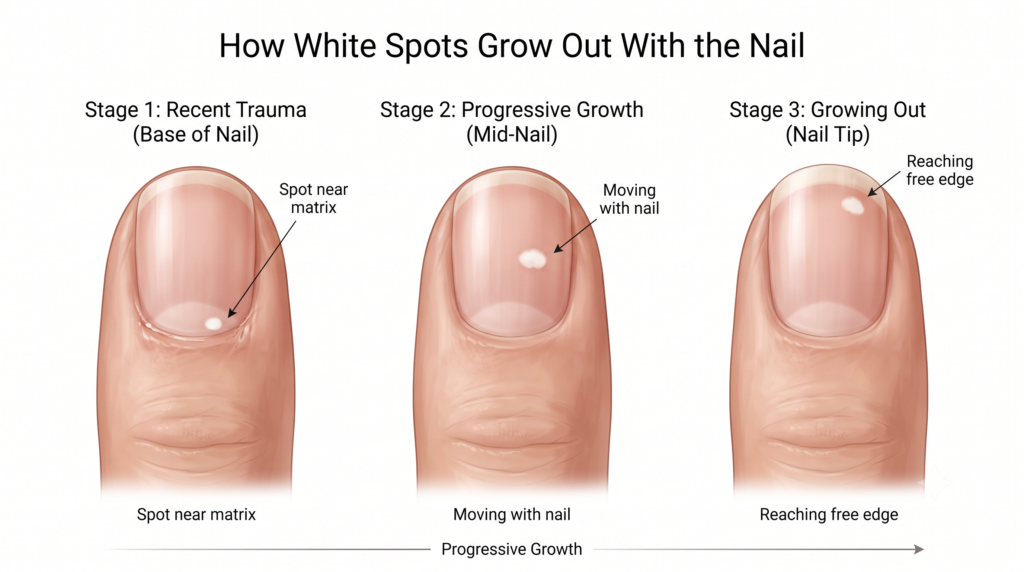
The visible part of your nail is made from nail tissue that has already grown out from the nail matrix, where the nail develops.
If the nail matrix is mildly injured, the change may not be visible right away. As the nail continues growing, the affected area moves forward and eventually becomes noticeable as a white mark.
This is why you may have a white spot without remembering any recent injury.
Can white spots appear on only one nail?
Yes, if the cause is a small injury or repeated pressure, you may notice a white mark on just one nail.
A single isolated spot on an otherwise healthy nail is often less concerning than widespread discoloration involving several nails.
What Causes White Spots on Nails?
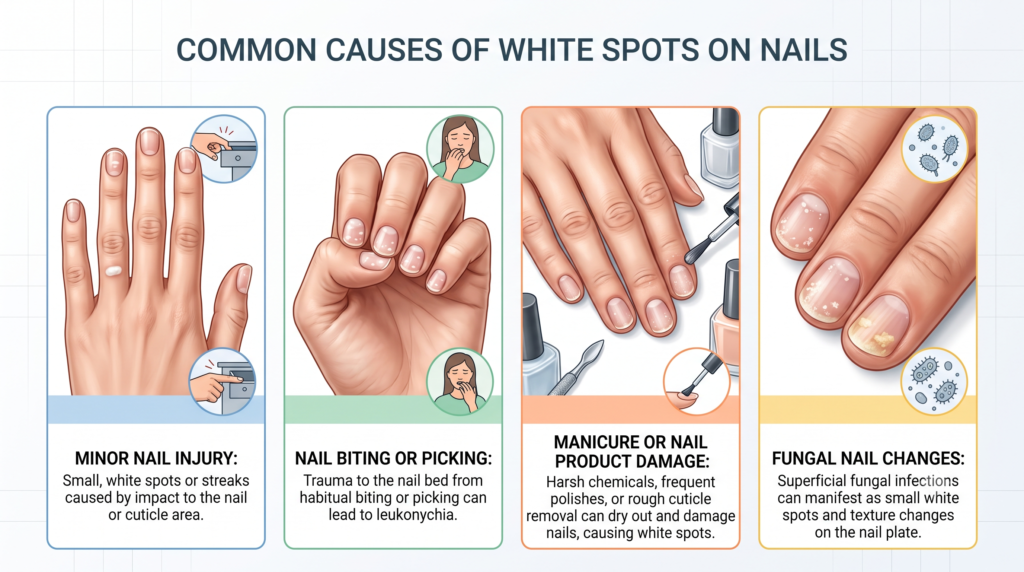
There are several possible causes of white spots on nails. Minor trauma is common, but the surrounding symptoms and appearance of the nail can provide additional clues.
Can minor nail injury cause white spots?
Yes, a small injury to the nail matrix can cause a white mark to develop as the nail grows.
The injury does not necessarily have to be dramatic. Bumping your nail, pinching it, or putting repeated pressure on it can sometimes be enough.
Can nail biting or picking cause white spots?
Repeated nail biting, picking, or manipulating the cuticles can cause minor damage to the nail.
If these habits happen frequently, the nail may have repeated interruptions in its normal growth. Avoiding unnecessary trauma gives the nail a better chance to grow normally.
Can manicures cause white spots?
They can in some situations. Aggressive filing, cuticle manipulation, artificial nails, gel products, or adhesives may irritate or damage the nail.
Some people can also develop a sensitivity or allergic reaction to ingredients used in nail products. If you repeatedly notice discoloration or other nail changes after a particular treatment, it is sensible to stop using the suspected product and seek advice if the problem continues.
Can a fungal infection cause white spots?
Certain fungal nail infections can cause white discoloration.
However, fungus often produces other changes as well. The nail may become thick, brittle, crumbly, yellowish or distorted. Therefore, a small white spot by itself does not automatically mean that you have a fungal nail infection.
Can skin conditions affect the nails?
Yes, Some skin conditions can cause noticeable nail changes.
For example, psoriasis can affect the nails and may cause pitting, discoloration, thickening or changes in how the nail attaches to the nail bed. Other inflammatory skin conditions can also affect nail appearance.
Are White Spots on Nails a Sign of Calcium Deficiency?
One of the most common explanations people hear for white spots is calcium deficiency. However, an isolated white spot is not a reliable way to tell whether you have low calcium.
Minor trauma is a much more common explanation for small, isolated white marks. While calcium and other nutrients are important for overall health, the appearance of one white spot does not provide enough information to diagnose a nutritional deficiency.
Should you take calcium supplements for white spots?
Not based on the white spots alone.
Taking a supplement without knowing whether you actually need it may not address the reason for the nail change. If you are concerned about your diet or suspect a nutritional deficiency, speak with a healthcare professional about whether dietary changes or testing are appropriate.
Can Vitamin or Mineral Deficiency Cause White Spots on Nails?
Nutrition can affect nail health, but white spots alone generally cannot identify which nutrient, if any, is lacking.
Can zinc deficiency affect the nails?
Zinc is important for normal growth and many processes in the body. Significant zinc deficiency can affect the skin, hair and nails.
However, it would be inaccurate to assume that every white spot means you have low zinc. A healthcare professional would need to consider your overall symptoms, diet and health history.
Can iron deficiency cause nail changes?
Iron deficiency can affect the appearance and strength of nails. However, the changes associated with iron deficiency are not limited to small white spots.
If unusual nail changes occur along with persistent tiredness, weakness or other unexplained symptoms, discussing them with a healthcare professional is more appropriate than trying to diagnose a deficiency from the nails alone.
Does eating a balanced diet help nail health?
Yes, your nails need adequate nutrition for normal growth.
A varied diet that includes protein, fruits, vegetables, whole grains and other nutrient-rich foods can support overall nail health. Supplements are not automatically necessary simply because white spots appear
How Can You Remove White Spots on Nails?
In most cases, you do not need to remove the white spot itself.
If the mark resulted from minor trauma, it will usually move toward the tip of the nail as the nail grows. Eventually, the affected section can be trimmed away.
Should you scrape or file off a white spot?
No, scraping, cutting into or aggressively filing the affected area can cause additional nail damage.
The white area is not usually something sitting on top of the nail that can simply be scrubbed away. Allowing the nail to grow naturally is generally the better approach when minor trauma is the likely cause.
What if the white spot does not grow out?
If a white mark remains in the same area, repeatedly returns or is accompanied by other nail changes, it may be worth having the nail examined.
A healthcare professional can look at the pattern and determine whether further evaluation is needed.
How Long Do White Spots on Nails Take to Go Away?
White spots caused by minor nail trauma usually disappear as the affected portion of the nail grows out.
The exact time varies because fingernails and toenails grow at different rates. Fingernails generally grow faster, while toenails can take considerably longer to replace.
Why do white spots take weeks or months to disappear?
Nails grow gradually from the nail matrix. The damaged portion does not instantly return to its normal appearance.
Instead, new nail growth slowly pushes the affected section toward the end of the nail. Once it grows far enough, you can trim it away.
How Can You Prevent White Spots on Nails?
You cannot prevent every white spot, especially those caused by accidental injuries. However, protecting your nails from repeated trauma can reduce the chances of developing them.
Avoid biting and picking your nails
Nail biting and picking can repeatedly damage the nail and surrounding skin.
Keeping nails trimmed and avoiding these habits can help reduce unnecessary trauma.
Be gentle with your cuticles
Avoid aggressively cutting or pushing back your cuticles. Rough treatment around the nail can irritate the surrounding tissue and potentially affect normal nail growth.
Use nail products carefully
If you frequently use gel polish, acrylic nails, artificial nails or strong adhesives, pay attention to any changes that appear afterward.
If a particular product seems to trigger irritation or nail changes, stop using it and seek professional advice if the problem persists.
Side Effects and Precautions
White spots themselves usually do not cause symptoms. The main concern is avoiding unnecessary treatment when the cause has not been established.
Do not take supplements based only on nail spots
A white spot does not automatically mean that you need calcium, zinc, iron or another supplement.
If you suspect a deficiency, discuss your concerns with a healthcare professional rather than starting high-dose supplements on your own.
Avoid harsh homemade treatments
There is no need to use abrasive substances or strong chemicals to try to remove a white spot.
Aggressive treatments may damage the nail without addressing the actual cause.
When to See a Doctor
Most small, isolated white spots are not a medical emergency. However, some nail changes should be evaluated.
When should persistent white spots be checked?
Consider speaking with a healthcare professional if the spots repeatedly return without an obvious cause or do not appear to be growing out normally.
What if several nails develop white spots?
White discoloration affecting many nails, particularly if it develops suddenly or is accompanied by other changes, deserves professional assessment.
What other nail changes should you watch for?
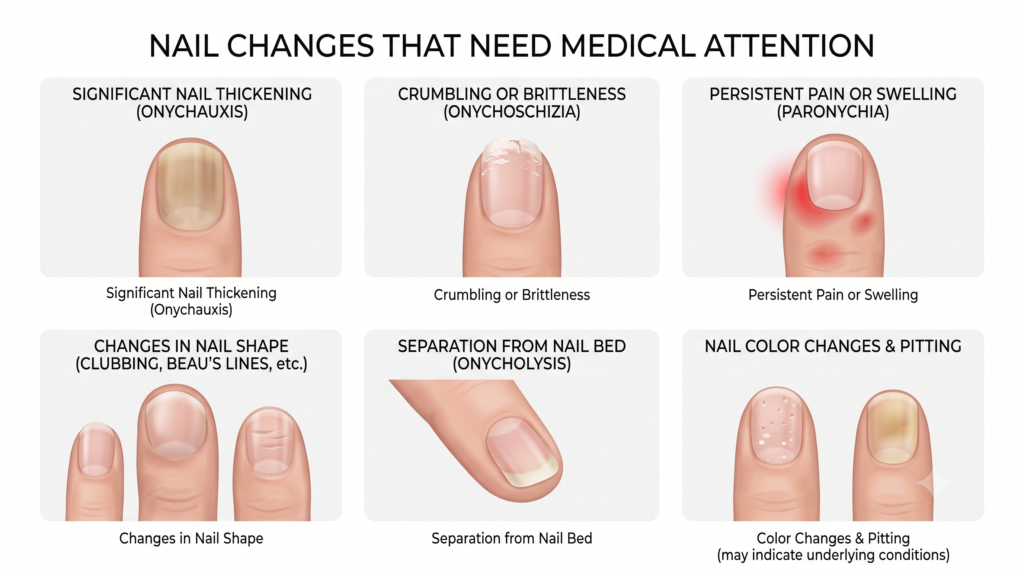
Seek medical advice if white spots occur with:
- Significant nail thickening
- Crumbling or unusual brittleness
- Persistent pain or swelling
- Changes in nail shape
- Separation of the nail from the nail bed
- Other unexplained changes in nail color or texture
These signs can have different causes and may require specific treatment.
Read More:
Why Do My Gums Hurt in One Spot?
How to Remove Plaque Naturally at Home
Frequently Asked Questions
Are white spots on nails normal?
Small isolated white spots are common and are often caused by minor trauma to the nail. They usually grow out naturally.
Do white spots mean I need more calcium?
Not necessarily. White spots are not a reliable indicator of calcium deficiency. Minor nail injury is a common cause of isolated white marks.
Can white spots on nails go away naturally?
Yes, when caused by minor trauma, the affected portion usually grows toward the tip of the nail and eventually gets trimmed away.
Can nail fungus cause white spots?
Yes, some fungal infections can cause white discoloration. However, fungal infections often cause additional changes such as thickening, brittleness or crumbling.
Should I take vitamins for white spots on my nails?
Not automatically. White spots alone do not establish that you have a vitamin or mineral deficiency. If you are concerned about a deficiency, discuss it with a healthcare professional.
Should I worry if white spots appear on several nails?
Not necessarily, but widespread or persistent nail discoloration is more worth evaluating than one isolated spot, especially if other nail or health changes are present.
Conclusion
White spots on nails are common and, in many cases, are simply the result of minor damage that occurred while the nail was growing. You may not remember the injury because it can take time for the affected area to become visible.
Although calcium deficiency is often blamed for white nail spots, an isolated white mark does not reliably indicate a calcium or vitamin deficiency. Nail trauma, biting, picking, manicures and other factors are more common explanations.
If the spot is small and the rest of the nail looks healthy, allowing it to grow out is often all that is needed. However, persistent discoloration, changes affecting several nails, or symptoms such as thickening, crumbling, pain or separation from the nail bed should be evaluated by a healthcare professional.
The best approach is simple: protect your nails, avoid unnecessary damage, maintain good nutrition and pay attention to changes that do not follow the usual pattern of normal nail growth.
Author
Monali Singh is a health content researcher who writes about wellness, dental care, and nutrition. She focuses on simplifying complex health topics for everyday readers.