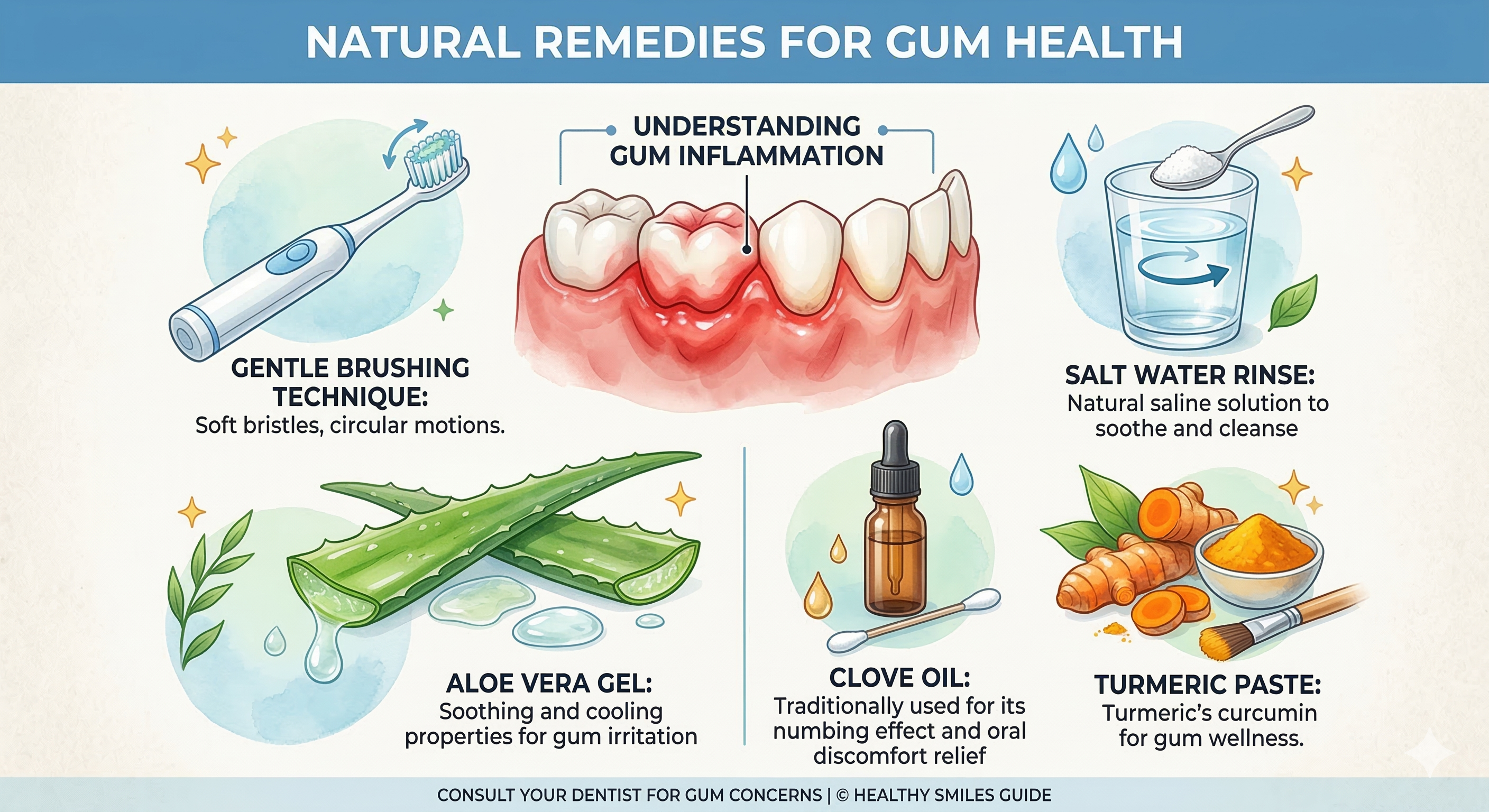

Swollen gums can make ordinary things such as brushing, eating, or even touching your teeth feel uncomfortable. Sometimes the cause is something relatively simple, such as plaque buildup or irritation around the gumline. In other cases, swelling can be related to gum disease, a dental infection, or a problem around a tooth.
That is why the goal of home care should not simply be to make the swelling disappear as quickly as possible. The first step is to understand what may be causing it and use gentle measures that support your oral health while knowing when professional dental treatment is needed.
Plaque that remains around the teeth and gumline can irritate the gums and contribute to gingivitis. If plaque hardens into tartar, it becomes much harder to remove at home and may require professional cleaning.

Why Are Your Gums Swollen and Inflamed?
Swollen gums are often associated with plaque buildup and early gum disease, but they are not caused by one problem alone.
Can plaque buildup cause swollen gums?
Yes, plaque is a sticky film containing bacteria that continuously forms on the teeth. When it is not removed properly through brushing and cleaning between the teeth, it can irritate the gums.
This can lead to redness, swelling, and bleeding, which are common signs of gingivitis.
What if one area of the gum is swollen?
Swelling around one particular tooth can have several possible causes, including trapped food, gum irritation, tooth decay, or an infection.
If the swelling is accompanied by significant pain, a bad taste, pus, fever, or facial swelling, it may indicate an abscess or another infection that needs dental treatment rather than home remedies alone.
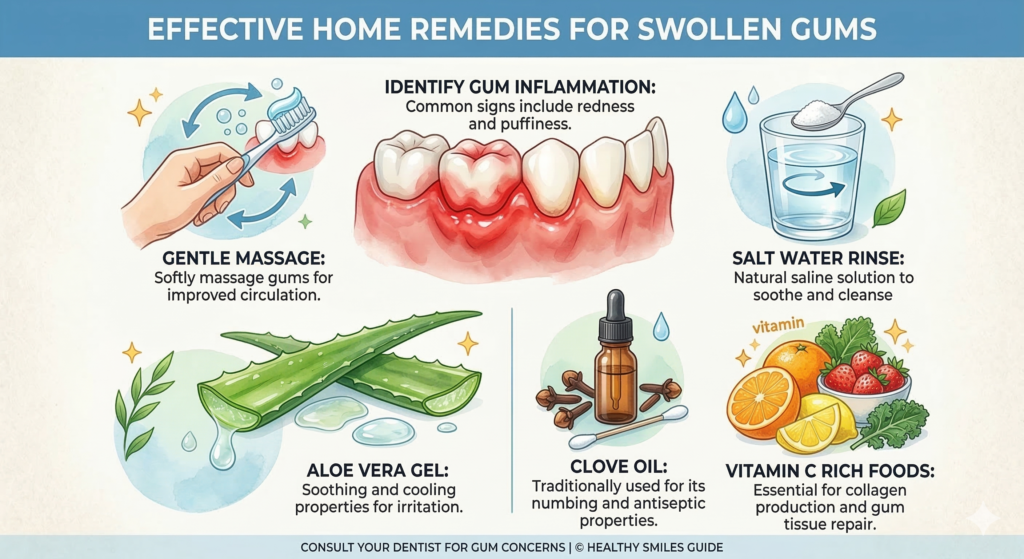
What Helps With Gum Pain and Swelling at Home?
For mild gum irritation, gentle oral care can help reduce the factors that are irritating the gums.
Rinse gently with warm salt water
A warm salt-water rinse can be a simple way to soothe an irritated mouth. A commonly used mixture is about half a teaspoon of salt dissolved in a glass of warm water. Rinse and spit it out rather than swallowing it.
The rinse may provide temporary comfort, but it does not remove tartar or treat a dental abscess. If swelling continues, the underlying cause still needs to be addressed.
Brush gently, but do not stop cleaning your teeth
It can be tempting to avoid brushing when the gums are swollen or bleeding. However, allowing more plaque to accumulate can make the irritation worse.
Use a soft-bristled toothbrush and fluoride toothpaste, and brush gently around the gumline. The ADA recommends brushing twice a day for about two minutes.
Clean between your teeth carefully
Plaque and food particles can remain between teeth where a toothbrush cannot reach effectively.
Daily flossing or another suitable interdental cleaner can help remove this buildup. If the gums are already inflamed, be gentle rather than forcing the floss into the tissue.
What Is the Fastest Way to Reduce Gum Inflammation?
There is no single home remedy that instantly cures swollen gums because the right treatment depends on the cause.
If plaque is the main problem, consistent brushing and interdental cleaning can help improve gum health. If tartar has already formed, however, home brushing cannot remove it effectively, and professional cleaning may be needed.
Can improving oral hygiene reduce swollen gums?
Yes, especially when the swelling is related to early plaque-induced gingivitis.
The improvement usually comes from consistently controlling plaque rather than from one quick treatment. If the gums remain swollen despite good oral care, that is a reason to have them checked.
What About Swollen Gums With Pus?
Swollen gums with pus should not be treated as an ordinary gum irritation.
Pus, swelling, redness, bad taste, pain, and fever can occur with a dental abscess. An abscess is an infection that can spread into surrounding tissues if it is not properly treated.
Can a home remedy cure a gum abscess?
No, a rinse may temporarily make your mouth feel more comfortable, but it does not remove the source of an abscess.
A dentist may need to drain the infection, clean the affected area, perform root canal treatment, or provide another appropriate treatment depending on the cause.
What Should You Avoid When Your Gums Are Swollen?
Avoid aggressively scrubbing swollen gums because excessive pressure can further irritate already sensitive tissue.
It is also better not to poke, squeeze, or try to drain a swollen area yourself. If an infection is present, manipulating it at home can delay appropriate treatment.
Very hot, irritating, or hard foods may also make an already sore mouth feel worse, so choosing softer foods temporarily may be more comfortable.
When Should You See a Dentist for Swollen Gums?
Mild gum irritation may improve with better oral hygiene, but persistent or worsening swelling deserves professional attention.
When is swelling more concerning?
See a dentist if the swelling continues, repeatedly returns, is associated with significant pain, bleeding, pus, bad breath, a bad taste, loose teeth, or difficulty eating.
Seek urgent medical attention if swelling is spreading into the face or neck or you are having difficulty breathing or swallowing.
Read More:
How Many Teeth Do Humans Have? | Dental Health Guide
Why Do My Gums Bleed When I Brush? Causes, Treatment, and Prevention
Frequently Asked Questions
What is the best home remedy for swollen gums?
For mild irritation, gentle brushing, daily cleaning between the teeth, and a warm salt-water rinse may provide support and temporary comfort. However, the best treatment depends on the cause of the swelling.
How can I reduce gum inflammation fast?
Start by removing plaque gently and consistently rather than aggressively brushing. A saltwater rinse may soothe the area, but swelling caused by tartar, advanced gum disease or infection may require professional treatment.
Can salt water cure swollen gums?
Salt-water rinsing can help soothe an irritated mouth, but it does not cure every cause of swollen gums. It cannot remove hardened tartar or treat an abscess.
How do I cure swollen gums with pus?
Swollen gums with pus should be evaluated by a dentist because pus can indicate an infection or abscess. Home remedies should not be used as a substitute for dental treatment.
How long does it take for swollen gums to go down?
The time varies depending on the cause. Mild irritation related to plaque may improve after consistent oral hygiene, while swelling caused by tartar, infection, or another dental problem may persist until the underlying problem is treated.
Can brushing make swollen gums worse?
Gentle brushing should not normally make healthy gums worse and is important for plaque control. However, brushing too aggressively can irritate the gums, so use a soft toothbrush and gentle technique.
Conclusion
Swollen gums are often a sign that something is irritating the gum tissue, and plaque buildup is one of the most common reasons. Gentle brushing, daily cleaning between the teeth, and a warm salt-water rinse can help with mild irritation and support healthier gums.
But home remedies have limits. If swelling is persistent, severe, repeatedly returns, or comes with pus, significant pain, fever, or facial swelling, the problem may require professional dental treatment.
The goal should not simply be to reduce the swelling for a day. It is to identify and address the reason your gums became swollen in the first place.
Author
Monali Singh is a health content researcher who writes about wellness, digestive health, dental care, and nutrition. She focuses on simplifying complex health topics so readers can make informed health decisions.