

Many people believe allergies are something you’re born with. But what if you suddenly start reacting to foods, dust, or pollen—even though you never had issues before?
It can feel confusing and even alarming.
The truth is, you can suddenly develop allergies later in life, and it’s more common than you think.
In this guide, we’ll explore why this happens, the warning signs, and what you can do to manage it effectively.
Can Allergies Appear Suddenly in Adults?
Yes, allergies can develop at any stage of life—even if you’ve never had them before.
This is known as adult-onset allergies.
Many people in their 20s, 30s, or even later report experiencing allergic reactions for the first time.
👉 In simple terms:
Your immune system can change over time, and sometimes it starts reacting to substances it once tolerated.
Why Am I Suddenly Allergic to Something?
There isn’t just one reason—several factors can trigger new allergies.
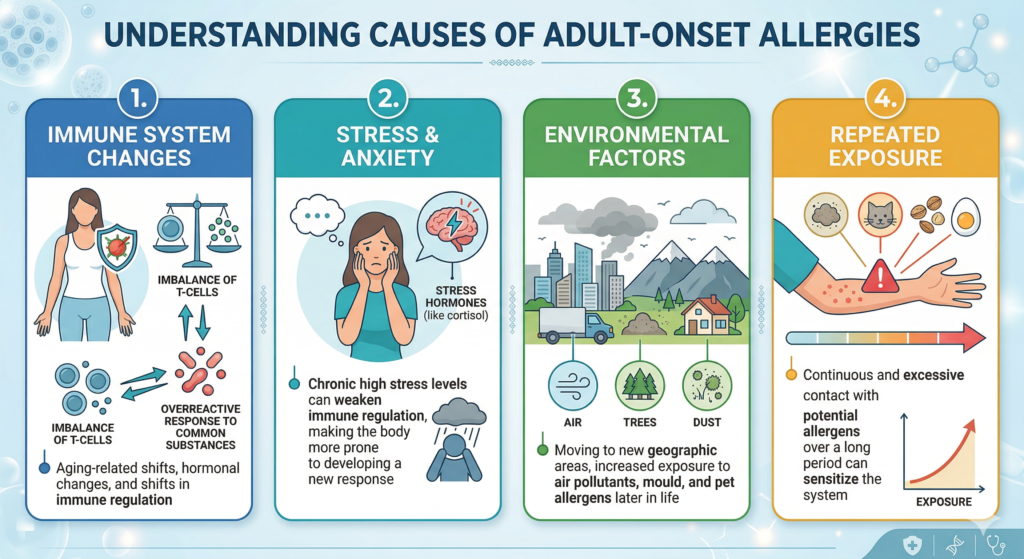
1. Changes in the Immune System
Your immune system evolves as you age.
Sometimes:
- It becomes more sensitive
- It misidentifies harmless substances as threats
This leads to allergic reactions.
2. Environmental Exposure
Moving to a new place or exposure to new allergens can trigger reactions.
Examples:
- Pollution
- Pollen
- Dust mites
Even a small change in environment can have a big impact.
3. Hormonal Changes
Hormonal fluctuations (especially in women) can influence immune responses.
This is why allergies may appear during:
- Pregnancy
- Menopause
4. Stress and Lifestyle
Chronic stress weakens your immune system.
👉 This can make your body more reactive to allergens.
5. Repeated Exposure to Allergens
Sometimes, repeated exposure builds sensitivity over time.
For example:
- Eating a certain food regularly
- Continuous exposure to dust or pets
Eventually, your body starts reacting.
Common Symptoms of Adult-Onset Allergies
Symptoms may vary depending on the type of allergy.
🔹 Respiratory Symptoms
- Sneezing
- Runny nose
- Nasal congestion
🔹 Skin Reactions
- Itching
- Rashes
- Hives
🔹 Digestive Issues
- Nausea
- Stomach discomfort
👉 Related read:
Can Constipation Cause Fever?
Types of Allergies That Can Develop Later
1. Food Allergies
Common triggers:
- Nuts
- Dairy
- Shellfish
2. Seasonal Allergies
Triggered by:
- Pollen
- Weather changes
3. Skin Allergies
Caused by:
- Cosmetics
- Soaps
- Chemicals
4. Pet Allergies
Developed due to:
- Animal dander
- Fur
You may also read:
Can Dandruff Cause Hair Loss?
When Should You Be Concerned?
Most allergies are mild, but some can be serious.
Seek medical help if you experience:
- Difficulty breathing
- Swelling of face or throat
- Severe skin reactions
👉 These could be signs of a serious allergic reaction.
How to Manage Sudden Allergies
1. Identify Triggers
Keep track of what causes reactions.
2. Avoid Allergens
Limit exposure to known triggers.
3. Maintain a Healthy Lifestyle
- Eat balanced diet
- Exercise regularly
- Manage stress
4. Use Over-the-Counter Remedies
Antihistamines may help reduce symptoms.
Can Sudden Allergies Go Away?
In some cases:
- Allergies may reduce over time
- Or become manageable
However, some allergies can be lifelong.
How Are Adult Allergies Diagnosed?
Doctors may recommend:
- Skin tests
- Blood tests
These help identify the exact allergen.
Conclusion
Developing allergies later in life can feel unexpected, but it’s a real and common phenomenon.
Changes in your immune system, environment, and lifestyle all play a role.
The key is to recognize symptoms early, identify triggers, and take appropriate steps to manage them.
👉 Don’t ignore sudden changes—your body is trying to tell you something.
Frequently Asked Questions
Can allergies appear out of nowhere?
Yes, adult-onset allergies can develop suddenly.
Why do allergies develop later in life?
Due to immune system changes, environment, and lifestyle factors.
Can stress cause allergies?
Stress can worsen or trigger allergic reactions.
Are adult allergies permanent?
Not always, but they may require long-term management.
Author
Monali Singh is a health content researcher who writes about wellness, dental care, and nutrition. She focuses on simplifying complex health topics for everyday readers.