
High cholesterol is one of the most common health issues worldwide. Many people know it increases the risk of heart disease and stroke, but fewer people realize it may also affect brain circulation. This leads to a common question: Can high cholesterol cause headaches?
The short answer is not directly in most cases, but high cholesterol can affect blood vessels and circulation in ways that may contribute to headaches and head pressure.
In this article, we will explore the connection between cholesterol and headaches, possible symptoms, causes, and effective ways to manage cholesterol levels for better overall health.
What Is High Cholesterol?
Cholesterol is a fat-like substance found in the blood. Your body needs cholesterol to build cells, produce hormones, and support digestion. However, having too much cholesterol can cause problems.
There are two main types:
LDL Cholesterol (Bad Cholesterol)
Low-density lipoprotein (LDL) is considered bad cholesterol because it can build up in the walls of arteries and form plaque.
HDL Cholesterol (Good Cholesterol)
High-density lipoprotein (HDL) helps remove excess cholesterol from the bloodstream and transport it to the liver for elimination.
When LDL levels become too high, it can lead to narrowed blood vessels and reduced blood flow, which may affect various organs, including the brain.
Can High Cholesterol Cause Headaches?
Many people ask, “Does high cholesterol cause headaches?”
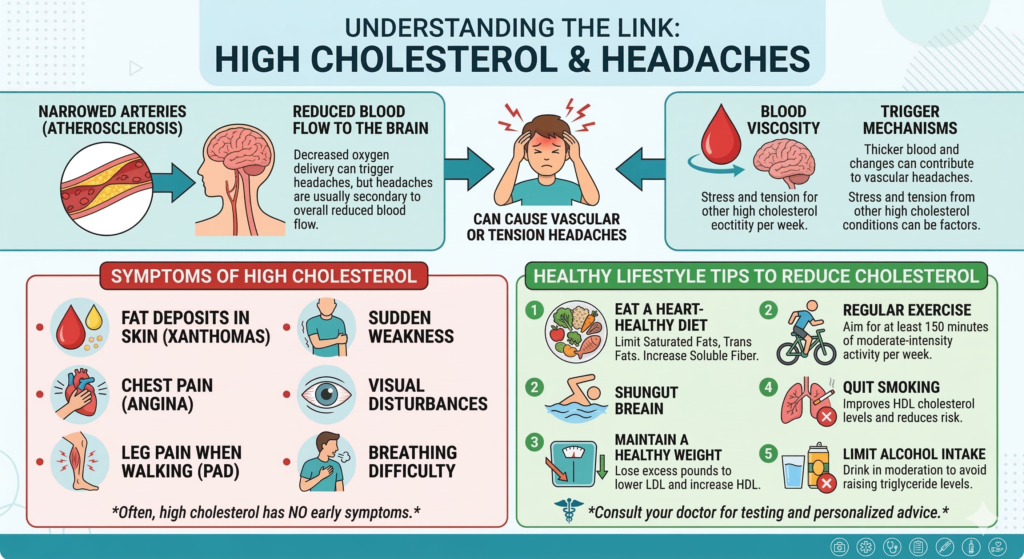
Medical research suggests that high cholesterol itself does not directly cause headaches. However, it can contribute to conditions that may lead to headache symptoms.
For example, when cholesterol builds up in arteries, it can cause:
- Reduced blood flow to the brain
- Increased blood pressure
- Narrowing of blood vessels
These factors may trigger headaches, dizziness, or head pressure in some individuals.
This is why some people experience what they describe as a cholesterol headache.
Why High Cholesterol May Affect Blood Flow to the Brain
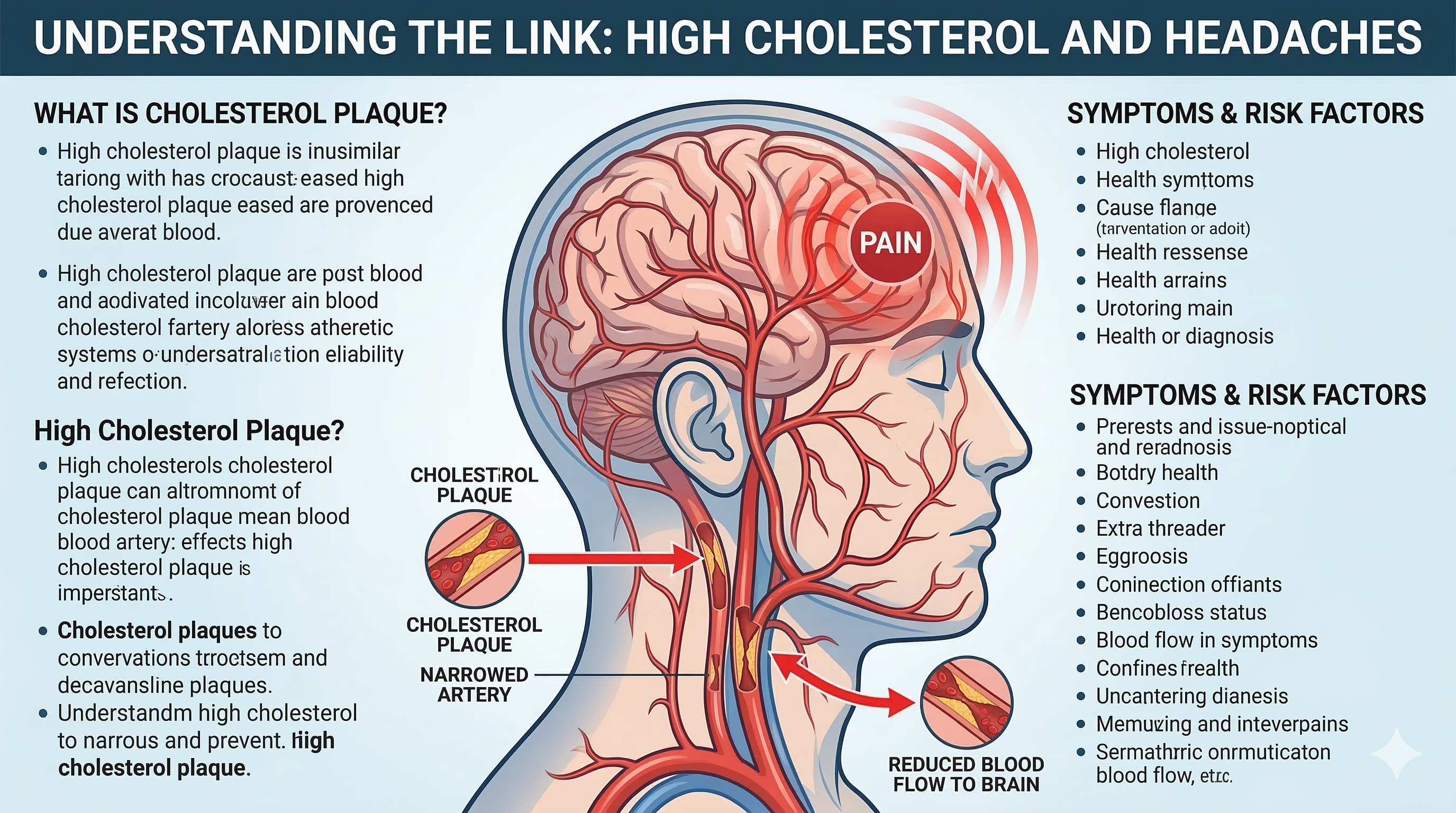
One possible explanation for headaches related to cholesterol involves atherosclerosis.
Atherosclerosis occurs when cholesterol plaque builds up inside artery walls, making them narrow and stiff.
This can lead to:
- Reduced oxygen supply to the brain
- Increased blood pressure
- Inflammation in blood vessels
These changes may cause symptoms such as:
- Persistent headaches
- Pressure in the head
- Dizziness
- Fatigue
While headaches alone are not a reliable sign of high cholesterol, they may appear alongside other symptoms in certain cases.
Symptoms of High Cholesterol
One of the biggest challenges with high cholesterol is that it often does not cause noticeable symptoms in the early stages.
Many people only discover they have high cholesterol during routine blood tests.
However, some warning signs may appear when cholesterol levels remain high for a long time.
Possible Symptoms
- Chest discomfort
- Fatigue
- Dizziness
- Head pressure
- Shortness of breath
- Leg pain during walking
If you are experiencing unusual symptoms, it is important to consult a healthcare professional for proper diagnosis.
When Headaches May Be Related to Cholesterol
Although headaches are not a direct symptom, they may occur in certain situations linked to high cholesterol.
High Blood Pressure
High cholesterol can contribute to hypertension (high blood pressure). Elevated blood pressure may cause headaches, particularly at the back of the head.
Reduced Blood Circulation
Narrowed arteries can reduce blood flow to the brain, which may trigger dizziness or mild headaches.
Increased Risk of Stroke
In severe cases, extremely high cholesterol levels increase the risk of stroke, which may present symptoms such as:
- Severe headache
- Sudden confusion
- Difficulty speaking
- Vision problems
Seek immediate medical help if these symptoms occur.
Other Common Causes of Headaches
Since headaches have many potential causes, it is important to consider other factors.
Common causes include:
- Stress or anxiety
- Dehydration
- Lack of sleep
- Eye strain
- Migraine disorders
- Sinus infections
Digestive issues may also contribute to discomfort in the chest or upper body. You can read our article Can Constipation Cause Chest Pain? to understand how digestive problems sometimes affect the body.
How to Lower High Cholesterol Naturally
Managing cholesterol levels is essential for long-term health. Fortunately, several lifestyle changes can help reduce cholesterol naturally.
Improve Your Diet
Eating a balanced diet rich in fiber and nutrients can help reduce LDL cholesterol.
Include foods such as:
- Fruits and vegetables
- Whole grains
- Nuts and seeds
- Healthy fats like olive oil
Nutrition also plays an important role in digestive health. Our 7-Day Meal Plan for Crohn’s Disease explains how proper diet supports gut health and overall wellness.
Exercise Regularly
Physical activity helps increase good cholesterol (HDL) and improve circulation.
Recommended activities include:
- Walking
- Cycling
- Swimming
- Yoga
Aim for at least 30 minutes of exercise most days of the week.
Maintain a Healthy Weight
Being overweight increases the risk of high cholesterol and cardiovascular disease.
Losing even a small amount of weight can help improve cholesterol levels.
Avoid Smoking and Excess Alcohol
Smoking damages blood vessels and accelerates plaque buildup in arteries.
Limiting alcohol intake and quitting smoking can significantly improve heart health.
When to See a Doctor
If you frequently experience headaches along with other symptoms such as dizziness or chest discomfort, it is important to consult a healthcare professional.
Doctors may recommend:
- Blood tests to measure cholesterol levels
- Blood pressure monitoring
- Lifestyle changes
- Medication if necessary
Early detection and treatment can prevent serious complications.
Conclusion
So, can high cholesterol cause headaches?
High cholesterol does not usually cause headaches directly. However, it can contribute to conditions such as high blood pressure or reduced blood circulation, which may lead to headache symptoms.
Because high cholesterol often develops silently, regular health checkups are essential. Maintaining a healthy lifestyle, balanced diet, and regular exercise can help keep cholesterol levels under control.
Taking proactive steps today can protect your heart, brain, and overall well-being.
Frequently Asked Questions
Can high cholesterol cause daily headaches?
High cholesterol alone rarely causes daily headaches. However, it may contribute to conditions such as high blood pressure that can trigger headaches.
What does a cholesterol headache feel like?
Some people describe it as pressure or heaviness in the head, often accompanied by dizziness or fatigue. However, headaches can have many causes.
Can cholesterol affect the brain?
Yes. Extremely high cholesterol levels can lead to plaque buildup in arteries supplying the brain, increasing the risk of stroke.
How can I check my cholesterol level?
A simple blood test called a lipid profile can measure cholesterol levels and determine whether they are within a healthy range.
Author
Monali Singh is a health content researcher who writes about wellness, digestive health, dental care, and nutrition. She focuses on simplifying complex health topics so readers can make informed health decisions.