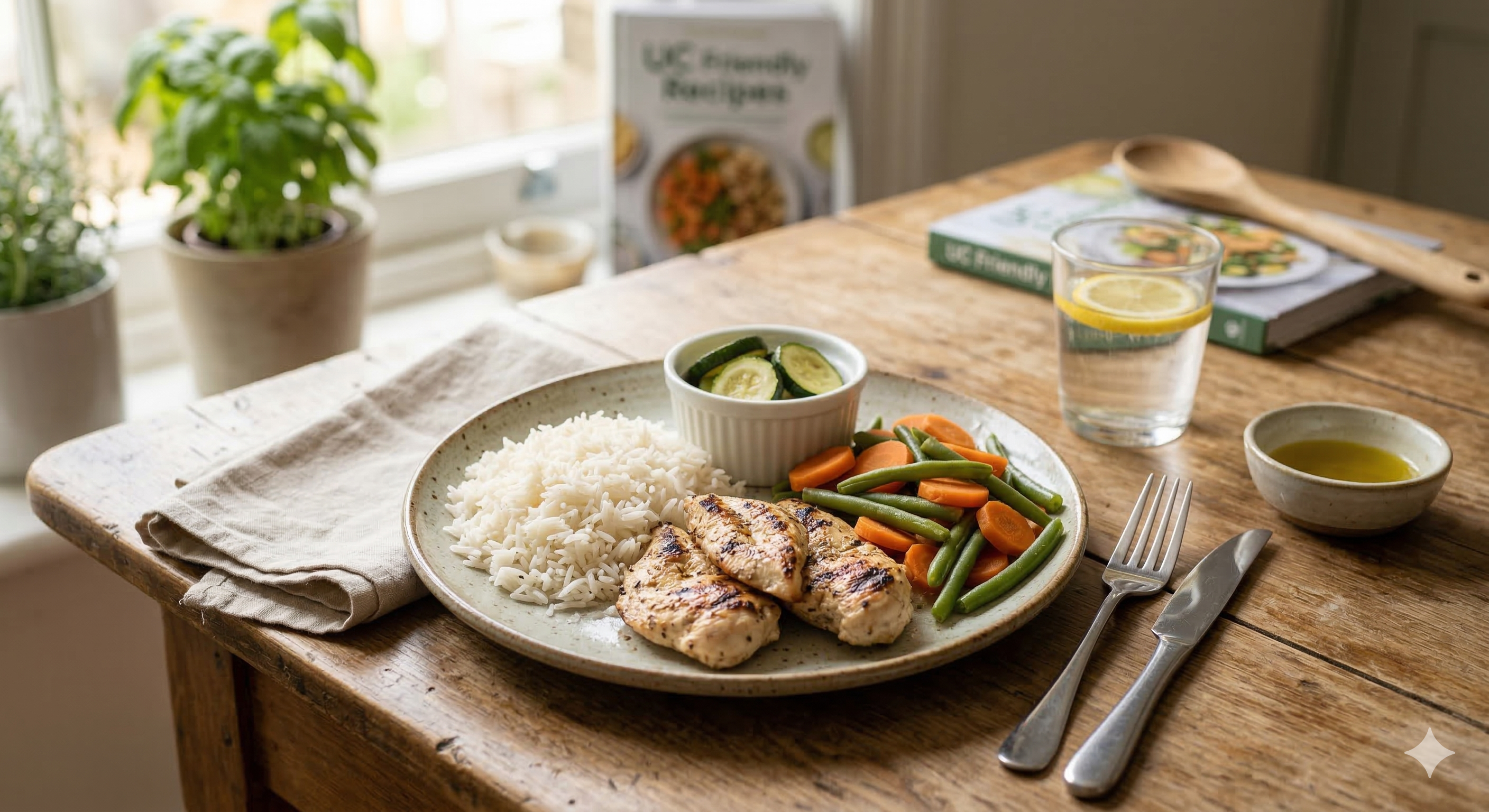

Finding something to eat when you have ulcerative colitis can become surprisingly stressful. A food that feels completely fine one day may seem difficult to tolerate during a flare, and this often leads people to search for a simple Crohn’s or ulcerative colitis meal plan they can follow for the entire week.
The problem is that there is no single diet that works for everyone with ulcerative colitis. Food triggers can vary from person to person, and what works during remission may not feel comfortable during an active flare. A food diary and guidance from your healthcare team or an IBD-focused dietitian can help identify your individual pattern.
The following 7-day plan is therefore a general meal-planning example, not a treatment for ulcerative colitis. It focuses on simple meals, adequate protein, fluids, and foods that are often easier to adjust when symptoms are active.
How Should You Eat When You Have Ulcerative Colitis?
The best meal plan depends on whether your symptoms are currently active or whether you are in remission.
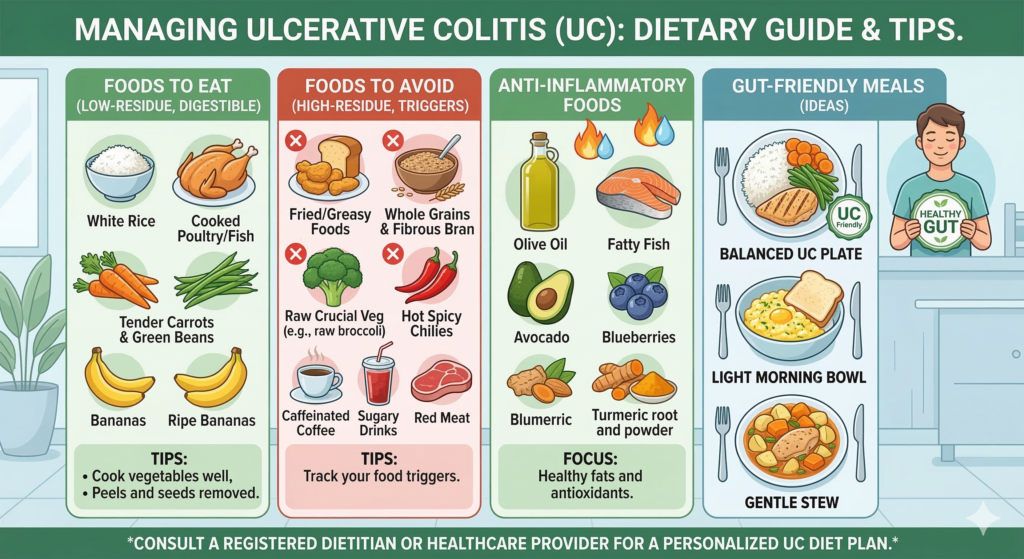
During a flare, some people tolerate softer, lower-fiber foods better, while foods such as raw vegetables, nuts, seeds, very spicy meals, high-fat foods, or dairy may worsen symptoms for some individuals. During remission, many people can gradually return to a broader and more varied diet.
Should you eat smaller meals during a flare?
Smaller, more frequent meals may be easier to tolerate than a few very large meals. Mayo Clinic recommends considering five or six smaller meals when symptoms are active rather than relying only on three large meals.
The goal is not to eat as little as possible. Each meal should still provide useful nutrition, especially protein and enough calories to support your body during illness.
7-Day Ulcerative Colitis Meal Plan
This sample plan is designed to be flexible. If a particular food consistently worsens your symptoms, replace it with another food you tolerate better rather than forcing yourself to follow the menu exactly.
Day 1: Gentle and Simple
Breakfast: Oatmeal made with milk or a lactose-free alternative, with a ripe banana.
Lunch: Plain white rice with grilled or baked chicken and well-cooked carrots.
Snack: Smooth yogurt if dairy is tolerated, or a lactose-free yogurt.
Dinner: Mashed potatoes with baked fish and cooked zucchini.
Keep drinks simple throughout the day, with water as the main option.
Day 2: Protein-Focused Meals
Breakfast: Scrambled eggs with toast and a ripe banana.
Lunch: Chicken and rice soup with soft-cooked vegetables.
Snack: Smooth peanut butter on toast if tolerated.
Dinner: Baked chicken with white rice and cooked carrots.
This type of day can be useful when appetite is low because the meals are relatively simple while still providing protein.
Day 3: Soft Foods and Easy Textures
Breakfast: Cream of rice or oatmeal with banana.
Lunch: Baked fish with mashed potatoes and cooked squash.
Snack: Yogurt or a smoothie made from foods you already know you tolerate.
Dinner: Chicken with rice and well-cooked vegetables.
Food texture can matter as much as the food itself. Some people tolerate cooked or blended produce better than raw versions during a flare.
Day 4: Simple Homemade Meals
Breakfast: Eggs with toast and a small serving of soft fruit.
Lunch: Rice bowl with chicken, cooked carrots, and a small amount of olive oil.
Snack: Banana with smooth nut butter if tolerated.
Dinner: Baked fish with mashed potatoes and cooked vegetables.
Avoid adding large amounts of chili, heavy sauces, or fried ingredients if these are known triggers for you.
Day 5: Balanced and Mild
Breakfast: Oatmeal with banana.
Lunch: Chicken soup with rice and soft vegetables.
Snack: Yogurt or lactose-free yogurt.
Dinner: Turkey or chicken with rice and cooked zucchini.
If dairy causes gas, cramping, or diarrhea, lactose-free alternatives may be easier to tolerate.
Day 6: Higher-Protein Options
Breakfast: Scrambled eggs with toast.
Lunch: Baked chicken with potatoes and cooked carrots.
Snack: Smooth nut butter with toast or a tolerated yogurt.
Dinner: Baked fish with rice and cooked vegetables.
Protein becomes particularly important when ulcerative colitis is active because nutritional needs can increase. The Crohn’s & Colitis Foundation recommends including protein-containing foods throughout the day during a flare.
Day 7: Flexible Recovery Day
Breakfast: Oatmeal with banana and a tolerated protein source.
Lunch: Chicken and rice with cooked vegetables.
Snack: Yogurt, smoothie, or another familiar food that does not trigger symptoms.
Dinner: Baked fish or chicken with potatoes and cooked vegetables.
By the end of the week, the goal should not be to have followed a perfect menu. It should be to understand which foods and textures your body handles comfortably and which ones repeatedly cause problems.
What Foods May Be Harder to Tolerate During an Ulcerative Colitis Flare?
There is no universal list of foods that everyone with UC must avoid. Still, certain foods are common symptom triggers.
Should you limit high-fiber foods during a flare?
Some people find raw vegetables, nuts, seeds, popcorn, corn, and other high-fiber or difficult-to-digest foods harder to tolerate during active symptoms. Cooking, blending, peeling, or otherwise changing the texture may make some foods easier to handle.
This does not mean fiber is permanently bad for ulcerative colitis. As symptoms improve, many people can gradually reintroduce a wider range of fruits, vegetables, and whole foods.
What about dairy, spicy foods, and fatty foods?
Dairy can worsen symptoms in people who are lactose-sensitive. Spicy foods and high-fat or fried foods can also trigger symptoms for some people.
Rather than removing everything at once, pay attention to your individual response. Keeping a food diary can help identify consistent patterns without unnecessarily restricting your diet.
What Should You Drink With Ulcerative Colitis?
Hydration becomes particularly important when diarrhea is frequent because fluid losses can increase the risk of dehydration.
Water is generally a good first choice. Depending on your symptoms, broth, smoothies, or oral rehydration solutions may also be useful. Caffeine, alcohol, and carbonated drinks can worsen diarrhea or gas for some people.
How can you stay hydrated during a flare?
Instead of waiting until you feel very thirsty, drink fluids regularly throughout the day.
If diarrhea is significant, ask your healthcare team whether an electrolyte-containing drink or oral rehydration solution would be appropriate. Persistent diarrhea, dizziness, very dark urine, or other signs of dehydration deserve medical attention.
Can You Follow the Same Meal Plan During Remission?
Not necessarily. When symptoms improve, restricting your diet too much can make it harder to get enough nutrients.
Foods that were difficult during a flare may become easier to tolerate when symptoms settle. Mayo Clinic recommends gradually reintroducing foods and keeping track of what you tolerate rather than permanently eliminating large food groups without a clear reason.
Why should you avoid unnecessary food restrictions?
Overly restrictive diets can lead to inadequate calories, protein, vitamins, and minerals. The Crohn’s & Colitis Foundation specifically warns against unnecessary restrictive diets because they can contribute to nutrient deficiencies and unplanned weight loss or malnutrition.
If your diet has become very limited, a registered dietitian experienced in IBD can help you expand it safely.
When Should You Talk to Your Doctor About Your Diet?
A meal plan can support nutrition, but it cannot replace medical treatment for ulcerative colitis.
Contact your healthcare team if symptoms are worsening, diarrhea or bleeding is persistent, you are losing weight without trying, you cannot eat enough, or you are becoming dehydrated. Your healthcare team can also help determine whether your symptoms represent a flare that needs treatment.
You can also read:
Apple Cider Vinegar and Cranberry Juice: Combination for Health
Can Constipation Cause a Fever?
Frequently Asked Questions
What is the best diet for ulcerative colitis?
There is no single diet that works for everyone. The best approach depends on your symptoms, food tolerance, nutritional needs, and whether you are experiencing a flare or remission.
Can I use a Crohn’s disease meal plan if I have ulcerative colitis?
Crohn’s disease and ulcerative colitis are both forms of IBD, so some general nutrition principles overlap. However, symptoms and food tolerance can differ, so a Crohn’s meal plan should not automatically be treated as the ideal plan for someone with UC.
What should I eat during an ulcerative colitis flare?
Many people find simple, softer, and lower-fiber foods easier to tolerate during a flare. Examples can include rice, potatoes, eggs, chicken, fish, bananas, and well-cooked vegetables, depending on individual tolerance.
Can I eat fruits and vegetables with ulcerative colitis?
Yes, fruits and vegetables provide important nutrients, but their texture and fiber content may need to be adjusted during a flare. Cooked, peeled, or blended versions may be easier for some people to tolerate.
Should I avoid dairy with ulcerative colitis?
Not everyone needs to avoid dairy. If milk and other dairy products cause gas, cramps, or diarrhea, lactose-free products may be easier to tolerate.
Is a 7-day meal plan enough to control ulcerative colitis?
No, a meal plan can help with nutrition and symptom management, but ulcerative colitis is a chronic inflammatory condition that may require medical treatment. Diet should be considered part of overall management rather than a replacement for prescribed treatment.
Conclusion
A good ulcerative colitis meal plan should be flexible rather than overly restrictive. During a flare, simpler foods, smaller meals, adequate fluids, and appropriate protein may be easier to manage, while foods can often be gradually expanded as symptoms improve.
The most important step is learning your own food tolerance. A food diary, regular communication with your healthcare team, and guidance from an IBD-focused dietitian can help you build a meal plan that provides enough nutrition without unnecessarily eliminating foods.
Author
Monali Singh is a health content researcher who writes about wellness, digestive health, dental care, and nutrition. She focuses on simplifying complex health topics so readers can make informed health decisions.