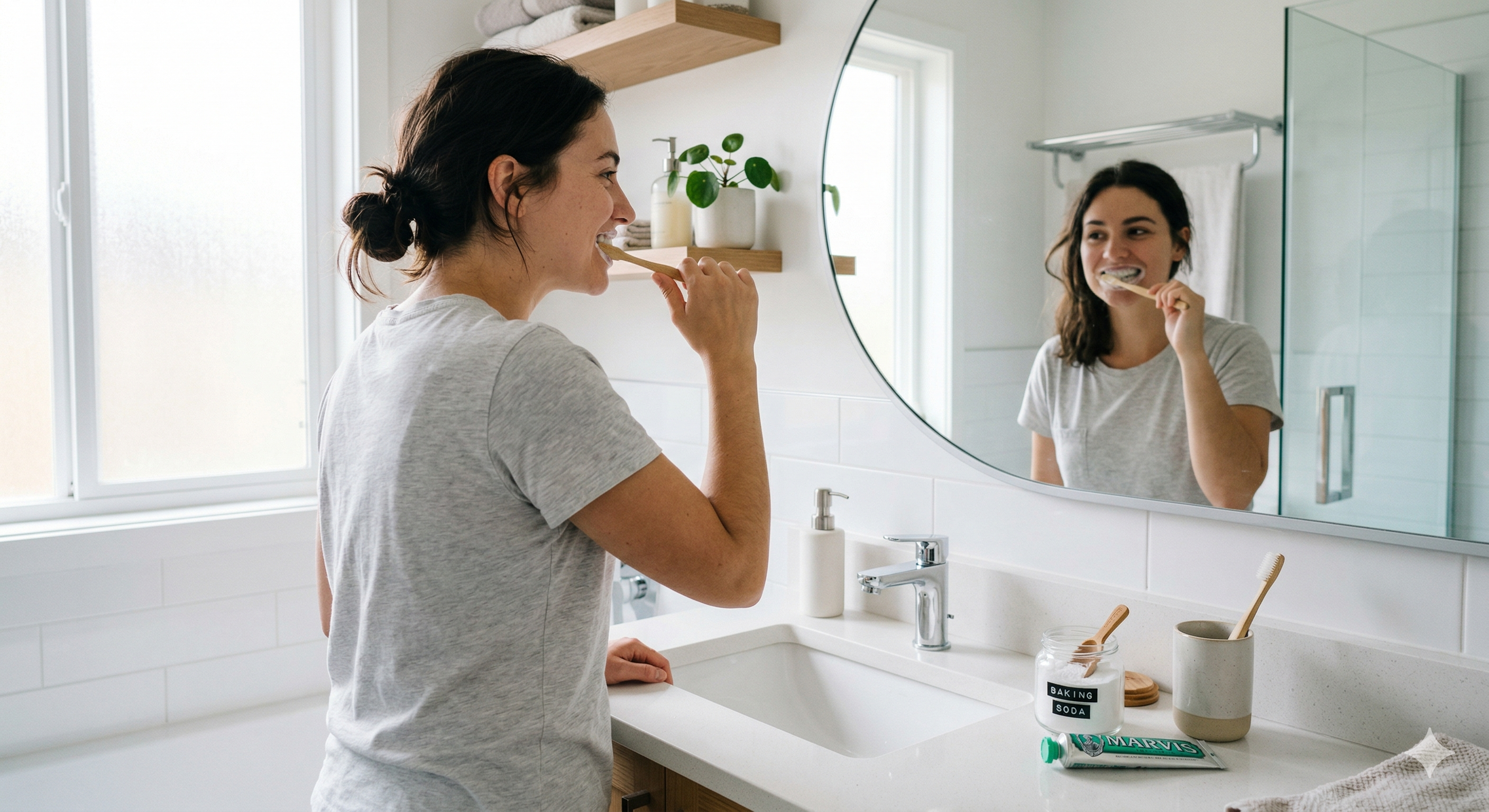

Plaque buildup on teeth is one of the most common dental issues people face today. It may seem harmless at first, but if ignored, it can turn into tartar, leading to gum disease, cavities, and bad breath.
The good news is that you don’t always need expensive dental treatments. With the right habits and simple home remedies, you can remove plaque from teeth naturally at home and maintain better oral health.
In this guide, we will cover effective, safe, and natural ways to deal with plaque—along with expert tips to prevent it from coming back.
What Is Plaque and Why Is It Harmful?
Plaque is a sticky film of bacteria that forms on your teeth after eating or drinking. When sugars and starches interact with bacteria in your mouth, plaque begins to develop.
If not removed:
- It hardens into tartar
- Causes gum inflammation
- Leads to cavities and tooth decay
Many people ignore plaque until it becomes a visible problem, but early removal is the key to preventing serious dental issues.
Signs You Have Plaque on Your Teeth
You may have plaque buildup if you notice:
- A yellowish layer on teeth
- Bad breath that doesn’t go away
- Bleeding gums while brushing
- Rough or fuzzy feeling on teeth
If you experience these symptoms, it’s time to take action immediately.
How to Remove Plaque from Teeth Naturally at Home
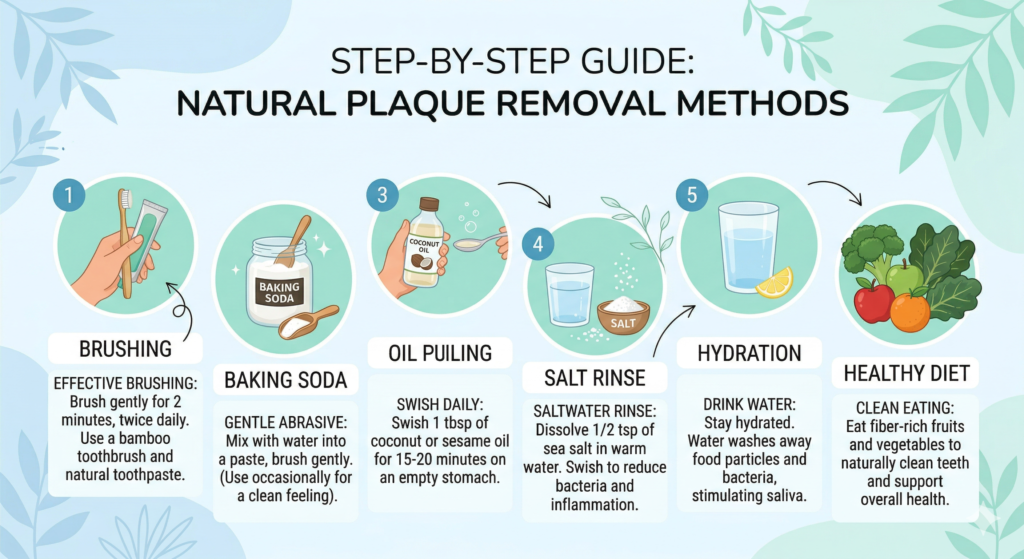
1. Brush Your Teeth Properly (Not Just Regularly)
Most people brush daily, but very few do it correctly.
To remove plaque effectively:
- Use a soft-bristled toothbrush
- Brush for at least 2 minutes
- Focus on the gum line
- Use circular motions instead of harsh scrubbing
Brushing properly can remove a significant amount of plaque before it hardens.
2. Use Baking Soda (Natural Cleanser)
Baking soda is one of the most popular natural remedies for plaque removal.
Benefits:
- Helps remove stains
- Neutralizes harmful acids
- Reduces bacteria
👉 Does baking soda remove plaque?
Yes, but it should be used in moderation (2–3 times per week) to avoid damaging tooth enamel.
3. Try Oil Pulling (Ancient but Effective)
Oil pulling is an old Ayurvedic practice that helps improve oral hygiene.
How it works:
- Reduces harmful bacteria
- Prevents plaque buildup
- Supports gum health
How to use:
- Take 1 tablespoon of coconut oil
- Swish in your mouth for 10–15 minutes
- Spit it out and rinse
Consistency is key to seeing results.
4. Hydrogen Peroxide Rinse
Hydrogen peroxide is known for its antibacterial properties.
👉 Does hydrogen peroxide whiten teeth?
Yes, it can help lighten stains and reduce plaque.
How to use:
- Mix with water
- Use as a mouth rinse occasionally
⚠️ Important: Do not swallow it.
5. Salt Water Rinse (Simple but Powerful)
Salt water is one of the easiest and most effective home remedies.
Benefits:
- Reduces inflammation
- Kills bacteria
- Promotes healing
Use it daily for better results.
6. Eat Crunchy Fruits and Vegetables
Your diet plays a huge role in oral health.
Foods like:
- Apples
- Carrots
- Cucumbers
Act as natural cleaners for your teeth and help remove plaque buildup.
7. Stay Hydrated Throughout the Day
Drinking enough water helps:
- Wash away food particles
- Prevent bacterial growth
- Maintain saliva production
A dry mouth increases plaque formation, so hydration is essential.
You may also read:
How Many Teeth Do Humans Have
Related article:
Home Remedies for Swollen Gums
How to Remove Tartar from Teeth Without Dentist
Many people confuse plaque with tartar.
👉 Key difference:
- Plaque = soft and removable
- Tartar = hardened and requires professional cleaning
While you cannot completely remove tartar at home, you can:
- Prevent it from forming
- Slow down its buildup
This is why early plaque removal is so important.
Common Mistakes to Avoid
Avoid these mistakes if you want healthy teeth:
- Brushing too hard (damages enamel)
- Overusing baking soda
- Skipping flossing
- Ignoring early symptoms
Consistency and correct technique matter more than anything else.
When Should You See a Dentist?
Even with natural remedies, some situations require professional care.
Consult a dentist if:
- You see hard yellow deposits (tartar)
- Gums bleed frequently
- Bad breath persists
- Pain or sensitivity increases
Ignoring these signs can lead to serious dental issues.
Conclusion
Removing plaque from teeth naturally at home is simple if you follow the right steps consistently. From proper brushing to natural remedies like oil pulling and baking soda, small habits can make a big difference.
However, prevention is always better than a cure. Maintaining daily oral hygiene and a healthy lifestyle will help you avoid plaque buildup and keep your smile healthy.
👉 Start today—your teeth will thank you later.
Frequently Asked Questions
Can plaque be removed naturally at home?
Yes, with proper brushing, diet, and natural remedies, plaque can be reduced effectively.
How long does it take to remove plaque?
With consistent care, you may notice improvement within a few days to weeks.
Is baking soda safe for teeth?
Yes, but it should be used in moderation to protect enamel.
Can I remove tartar at home?
No, tartar requires professional dental cleaning, but you can prevent it.
Author
Monali Singh is a health content researcher who writes about wellness, dental care, and nutrition. She focuses on simplifying complex health topics for everyday readers.