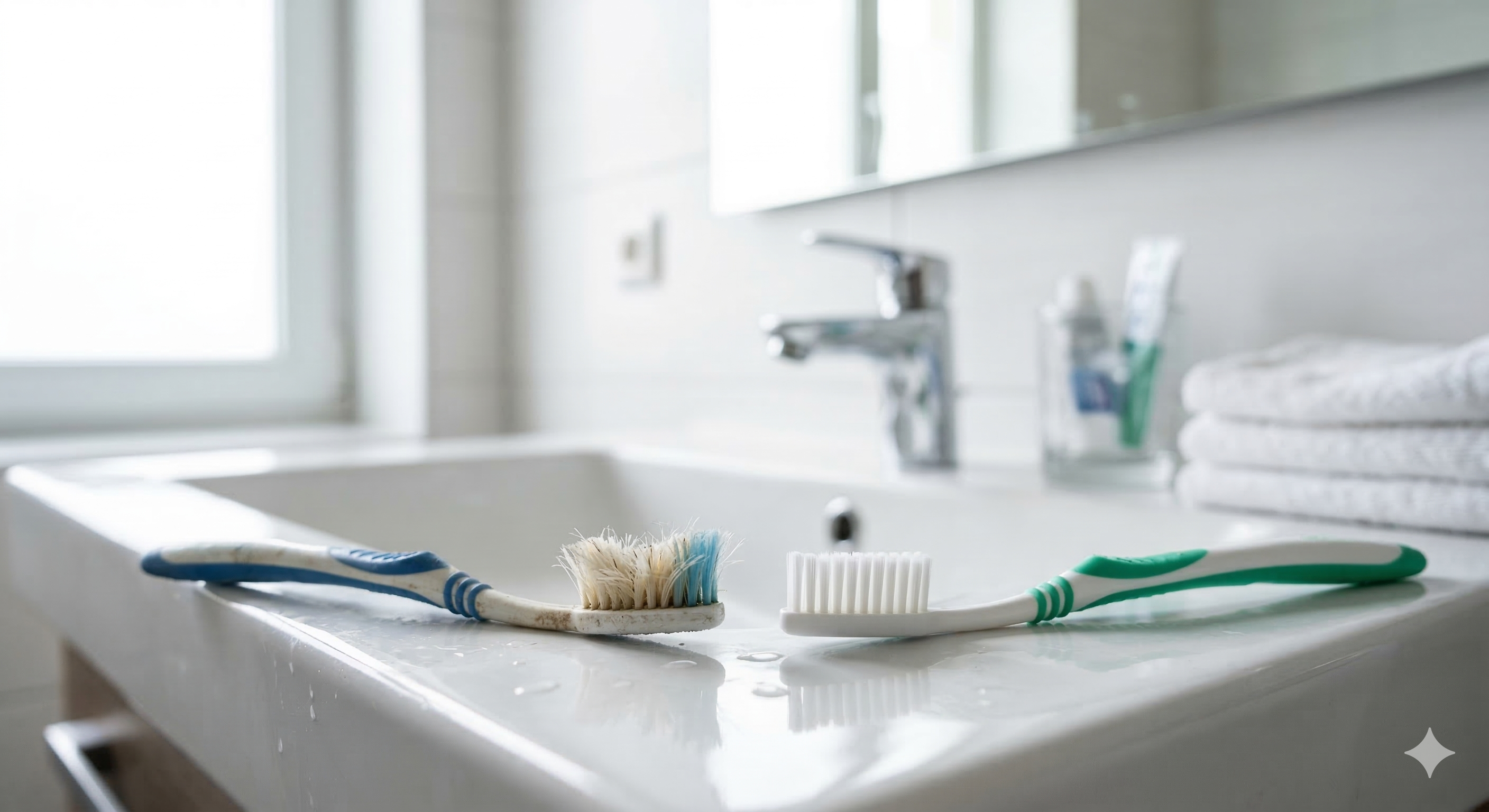

Maintaining proper oral hygiene is essential for healthy teeth and gums. Most people remember to brush their teeth twice a day, but many forget one important step in dental care — replacing their toothbrush regularly.
If you have ever wondered how often should you replace your toothbrush, dentists generally recommend replacing it every three to four months.
Over time, toothbrush bristles wear out and become less effective at removing plaque and bacteria from teeth. Using an old toothbrush may reduce cleaning efficiency and increase the risk of dental problems.
This guide explains when to replace your toothbrush, signs you need a new one, and tips for maintaining good oral hygiene.
Why Replacing Your Toothbrush Is Important
Your toothbrush is the primary tool for cleaning your teeth and removing plaque.
However, after weeks of use, toothbrush bristles begin to lose their shape and effectiveness. Worn-out bristles cannot clean teeth properly and may even irritate gums.
Replacing your toothbrush regularly helps:
- Remove plaque effectively
- Prevent bacteria buildup
- Protect gums from irritation
- Maintain better oral hygiene
Keeping your toothbrush fresh is an important step toward maintaining a healthy smile.
Understanding the basics of dental health is important for maintaining a healthy smile. If you want to learn more about human teeth structure, you can read our detailed guide on How Many Teeth Do Humans Have? Complete Dental Health Guide.
How Often Should You Replace Your Toothbrush?
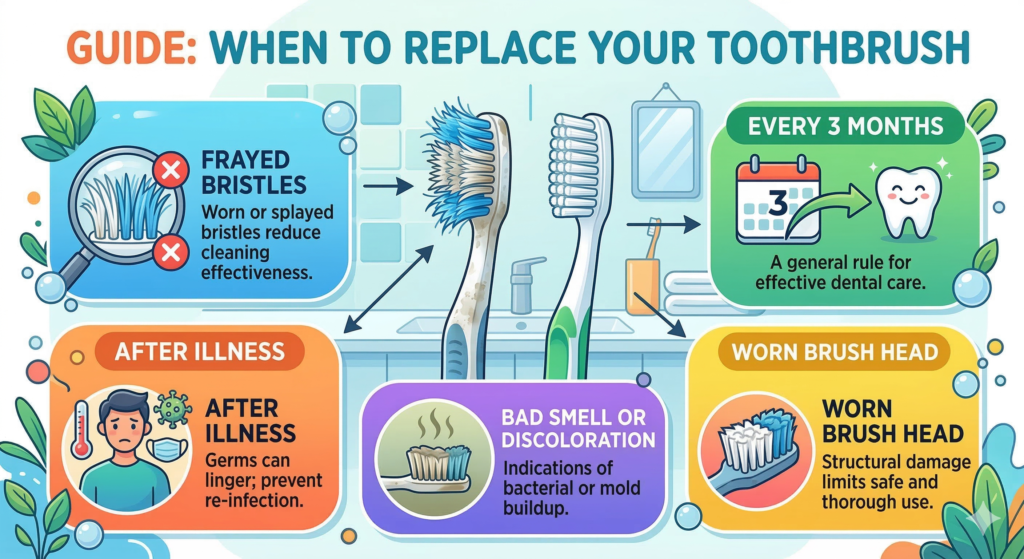
Dentists recommend replacing your toothbrush every three to four months.
After this period, the bristles become worn out and lose their ability to clean teeth effectively.
The same rule applies to electric toothbrush heads, which should also be replaced every three months.
However, some situations require replacing your toothbrush earlier.
Signs You Need a New Toothbrush
Frayed Bristles
When the bristles start spreading outward or bending, the toothbrush becomes less effective at cleaning teeth.
Frayed bristles cannot remove plaque from difficult areas between teeth.
After Being Sick
If you recently had a cold, flu, or throat infection, it is recommended to replace your toothbrush.
Bacteria and viruses can remain on the bristles and may cause reinfection.
Bad Smell from the Toothbrush
A toothbrush should not have an unpleasant smell.
If your toothbrush develops a foul odor, it may indicate bacterial buildup.
Discolored Bristles
Some toothbrushes include indicator bristles that fade with use. When the color fades significantly, it is time to replace the toothbrush.
What Happens If You Don’t Replace Your Toothbrush?
Using an old toothbrush may increase bacteria buildup in the mouth, which can irritate your gums and lead to inflammation. If you are already experiencing gum swelling, you can try some natural remedies for swollen gums to reduce pain and inflammation.
Using the same toothbrush for too long may lead to several dental problems.
Ineffective Plaque Removal
Worn-out bristles cannot remove plaque effectively, which may lead to cavities.
Gum Irritation
Damaged bristles may irritate your gums and increase the risk of gum inflammation.
If you experience bleeding gums while brushing, you can read our guide on Why Do My Gums Bleed When I Brush? to understand the causes and prevention.
Increased Bacteria Growth
Bathrooms are humid environments where bacteria can grow easily. Old toothbrushes may accumulate bacteria over time.
Replacing your toothbrush regularly helps reduce this risk.
How to Store Your Toothbrush Properly
Proper storage helps keep your toothbrush clean and hygienic.
Follow these simple tips:
- Rinse the toothbrush thoroughly after brushing
- Store it upright in a toothbrush holder
- Allow it to air dry completely
- Avoid covering the toothbrush head
These habits help prevent bacterial growth.
Choosing the Right Toothbrush
Selecting the right toothbrush is also important for maintaining healthy teeth.
Dentists recommend toothbrushes with:
- Soft bristles
- Small brush head
- Comfortable handle
Soft-bristle toothbrushes clean teeth effectively while protecting enamel and gums.
Simple Daily Dental Care Routine
A proper oral hygiene routine helps maintain healthy teeth and gums.
Morning routine:
- Brush teeth for two minutes
- Use fluoride toothpaste
Night routine:
- Brush before sleeping
- Clean your tongue
Weekly routine:
- Check the condition of your toothbrush
Following these habits helps prevent cavities and gum disease.
Conclusion
Replacing your toothbrush regularly is a simple but essential step in maintaining good oral hygiene.
Dentists recommend changing your toothbrush every three to four months or sooner if the bristles become worn out or after illness.
A fresh toothbrush helps remove plaque effectively, reduces bacteria buildup, and protects your gums.
By maintaining proper brushing habits and replacing your toothbrush regularly, you can keep your teeth healthy and your smile bright.
Frequently Asked Questions
How often should you replace your toothbrush?
Dentists recommend replacing your toothbrush every three to four months or sooner if the bristles become frayed.
Can an old toothbrush cause dental problems?
Yes. Worn-out toothbrush bristles cannot clean teeth effectively and may contribute to plaque buildup and gum irritation.
Should you replace your toothbrush after illness?
Yes. Replacing your toothbrush after illness helps prevent bacteria and viruses from remaining on the bristles.
How long does an electric toothbrush head last?
Electric toothbrush heads should also be replaced every three months for proper cleaning performance.
Author
Monali Singh is a health content researcher who writes about wellness, dental care, and nutrition. She focuses on simplifying complex health topics for everyday readers.