

Introduction
Bleeding gums are a common dental problem that many people notice while brushing or flossing their teeth. Although it may seem minor, bleeding gums can sometimes indicate underlying oral health issues. Healthy gums normally do not bleed during brushing, so noticing blood may be a sign that your gums need better care.
Maintaining good oral hygiene and understanding the causes of bleeding gums can help prevent more serious dental problems in the future. Dental experts from the American Dental Association emphasize the importance of daily brushing, flossing, and regular dental checkups to keep gums healthy.
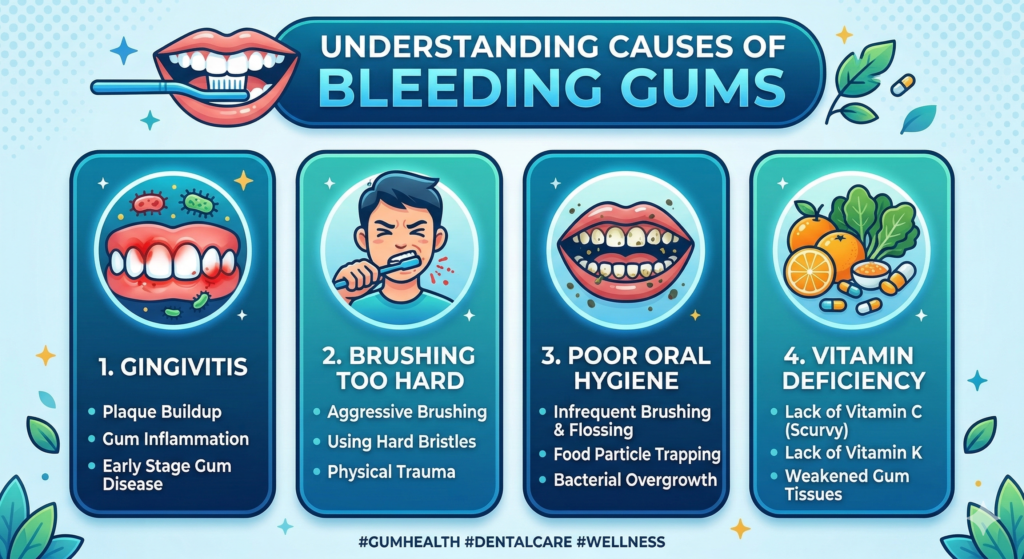
Common Causes of Bleeding Gums
Gingivitis
One of the most common causes of bleeding gums is gingivitis. Gingivitis occurs when plaque builds up along the gum line and causes inflammation. Symptoms include red, swollen gums that may bleed during brushing or flossing.
Understanding dental structure is important for oral health, including knowing how many teeth humans have and their functions.
Brushing Too Hard
Using excessive force while brushing can damage gum tissue and cause bleeding. A soft-bristled toothbrush and gentle brushing technique are recommended for protecting gums.
Poor Oral Hygiene
When plaque and bacteria accumulate in the mouth due to inadequate brushing and flossing, gums become irritated and may bleed easily.
Vitamin Deficiency
Deficiencies in important nutrients, especially vitamin C and vitamin K, can weaken gum tissues and lead to bleeding.
Periodontitis
If gingivitis is left untreated, it may develop into periodontitis. This serious gum infection can damage the bone supporting the teeth and may lead to tooth loss.
Other Possible Causes of Bleeding Gums
Several additional factors may contribute to bleeding gums, including:
- Hormonal changes during pregnancy
- Smoking or tobacco use
- Ill-fitting dentures
- Certain medications
- Medical conditions affecting the immune system
Identifying the cause is important for choosing the right treatment.
Vitamins play an important role in maintaining healthy tissues, including gums and skin, similar to how vitamin C serum benefits skin health.
When Should You See a Dentist?
Occasional mild bleeding may occur if you recently started flossing or brushing more regularly. However, you should consult a dentist if:
- Bleeding continues for more than a week
- Gums appear swollen or painful
- You experience persistent bad breath
- Teeth feel loose
Professional dental examinations can detect gum disease early and prevent complications.
How to Stop Gums from Bleeding
Improve Your Brushing Technique
Brush gently using circular motions and a soft toothbrush.
Floss Daily
Flossing removes plaque between teeth that brushing alone cannot reach.
Use antibacterial mouthwash
Mouthwash can help reduce bacteria and improve gum health.
Eat a Balanced Diet
A diet rich in vitamins and minerals supports healthy gums.
Visit Your Dentist Regularly
Regular dental cleanings remove plaque buildup and prevent gum disease.
Nutrients that support tissue health, such as collagen benefits for men, are also important for maintaining strong gums and oral structures.
Tips for Maintaining Healthy Gums
To keep your gums healthy, follow these simple habits:
- Brush twice daily
- Floss every day
- Replace your toothbrush every three months
- Limit sugary foods and drinks
- Drink plenty of water
- Avoid smoking
Maintaining good dental hygiene also includes understanding basic oral health topics, such as how many teeth humans have and how they function in chewing and digestion.
Conclusion
Bleeding gums while brushing are often a sign that your gums need better care. Common causes include gingivitis, brushing too hard, poor oral hygiene, and vitamin deficiencies.
Most cases can be improved by maintaining proper oral hygiene habits such as brushing gently, flossing daily, and visiting a dentist regularly. Taking care of your gums not only protects your teeth but also contributes to better overall health.
If bleeding persists or becomes severe, it is important to seek professional dental advice to prevent serious gum disease.
Nutritional deficiencies can also affect gum health, which is why recognizing vitamin D deficiency symptoms is important for overall wellness.
Frequently Asked Questions
Is it normal for gums to bleed when brushing?
No. Healthy gums should not bleed during brushing.
Can bleeding gums heal on their own?
In mild cases, improving oral hygiene may stop the bleeding.
What vitamin deficiency causes bleeding gums?
A lack of vitamin C or vitamin K can contribute to bleeding gums.
Does flossing cause bleeding gums?
Flossing may cause slight bleeding at first if gums are inflamed, but regular flossing usually improves gum health.
Author
Monali Singh is a health content researcher who writes about wellness, dental care, and nutrition. She focuses on simplifying complex health topics for everyday readers.