

Ashwagandha is one of the most powerful herbs used in traditional Ayurvedic medicine. Known scientifically as Withania somnifera, this adaptogenic herb has been used for centuries to support stress management, immunity, and overall health.
In recent years, ashwagandha has gained popularity in skincare because of its antioxidant, anti-inflammatory, and anti-aging properties. Many dermatologists believe that compounds in the herb may help improve skin hydration, reduce wrinkles, and protect the skin from environmental damage.
In this guide, we will explore the benefits of ashwagandha for skin, how to use it safely, and what scientific studies say about this natural skincare ingredient.
What Is Ashwagandha?
Ashwagandha is a small shrub native to India, the Middle East, and parts of Africa. It is a key herb used in Ayurveda, where it has been used for more than 3,000 years.
The roots and leaves of the plant contain powerful compounds called “withanolides,” which are believed to provide many of the herb’s health benefits.
These compounds help:
- Reduce inflammation
- Fight oxidative stress
- Support collagen production
- Improve skin resilience
Because of these properties, ashwagandha is increasingly used in natural skincare products and supplements.
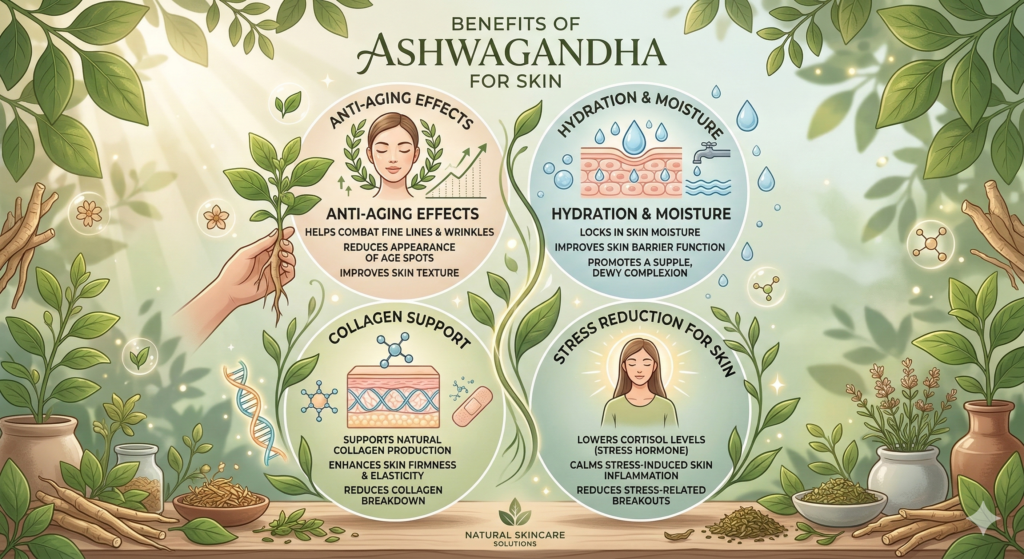
Ashwagandha Benefits for Skin
1. Anti-Aging Effects
One of the most popular benefits of ashwagandha is its potential anti-aging effect.
The herb contains antioxidants that help neutralize free radicals, which can damage skin cells and accelerate aging.
Regular use may help:
- Reduce wrinkles and fine lines
- Improve skin elasticity
- Promote a youthful appearance
2. Supports Collagen Production
Collagen is essential for maintaining firm and healthy skin. With age, collagen production naturally decreases.
Studies suggest that compounds in ashwagandha may help support collagen synthesis, which can improve skin structure and elasticity.
3. Reduces Skin Inflammation
Ashwagandha has strong anti-inflammatory properties, which may help calm irritated or sensitive skin.
This may be helpful for conditions such as:
- Acne
- Skin redness
- Irritation caused by environmental factors
4. Helps Improve Skin Hydration
Ashwagandha may also help maintain skin hydration. The herb supports skin barrier function, which helps prevent moisture loss.
Hydrated skin appears
- Softer
- Smoother
- More radiant
5. May Improve Skin Tone
Some skincare experts believe that ashwagandha can help reduce hyperpigmentation and improve uneven skin tone.
Its antioxidant properties may help protect the skin from sun damage and pollution.
6. Helps Reduce Stress-Related Skin Problems
Stress can trigger several skin conditions such as acne and premature aging.
Ashwagandha is known as an adaptogen, meaning it helps the body adapt to stress and balance hormone levels. Reduced stress can positively affect skin health.
7. Supports Overall Skin Health
When used regularly as part of a balanced skincare routine, ashwagandha may help support overall skin health by protecting skin cells and improving resilience.
How to Use Ashwagandha for Skin
There are several ways to include ashwagandha in your skincare routine.
Topical Skincare Products
Ashwagandha is commonly found in the following:
- Serums
- Creams
- Facial oils
These products may help deliver antioxidants directly to the skin.
DIY Face Masks
You can also create natural face masks by mixing ashwagandha powder with:
- Honey
- Yogurt
- Aloe vera
This combination may help soothe and hydrate the skin.
Possible Side Effects
Although ashwagandha is generally safe for most people, some individuals may experience mild reactions such as skin irritation.
People with sensitive skin should perform a patch test before using products containing ashwagandha.
If irritation occurs, discontinue use and consult a healthcare professional.
Conclusion
Ashwagandha is a powerful herb from traditional Ayurveda that offers several potential benefits for skin health. Thanks to its antioxidant and anti-inflammatory properties, it may help reduce signs of aging, support collagen production, and protect the skin from environmental stress.
Regular use of Ashwagandha in skincare products or as a supplement may help improve skin hydration, promote a natural glow, and reduce issues such as acne and dullness. By lowering stress levels in the body, it may also indirectly improve skin conditions that are triggered by stress.
However, results can vary depending on skin type and how the herb is used. For the best results, combine ashwagandha with a balanced diet, proper skincare routine, and an overall healthy lifestyle.
Collagen is essential for maintaining firm and youthful skin.
Nutritional deficiencies can also impact skin health and overall wellness.
Frequently Asked Questions
Is ashwagandha good for acne?
Ashwagandha’s anti-inflammatory properties may help calm acne-related redness and irritation.
How long does it take to see results?
Visible improvements in skin texture and hydration may take several weeks of consistent use.
Can ashwagandha brighten skin?
The antioxidant compounds in ashwagandha may help improve skin tone and reduce dullness.
Author
Monali Singh is a health content researcher who writes about wellness, dental care, and nutrition. She focuses on simplifying complex health topics for everyday readers and sharing practical information that helps people make better lifestyle and health decisions.