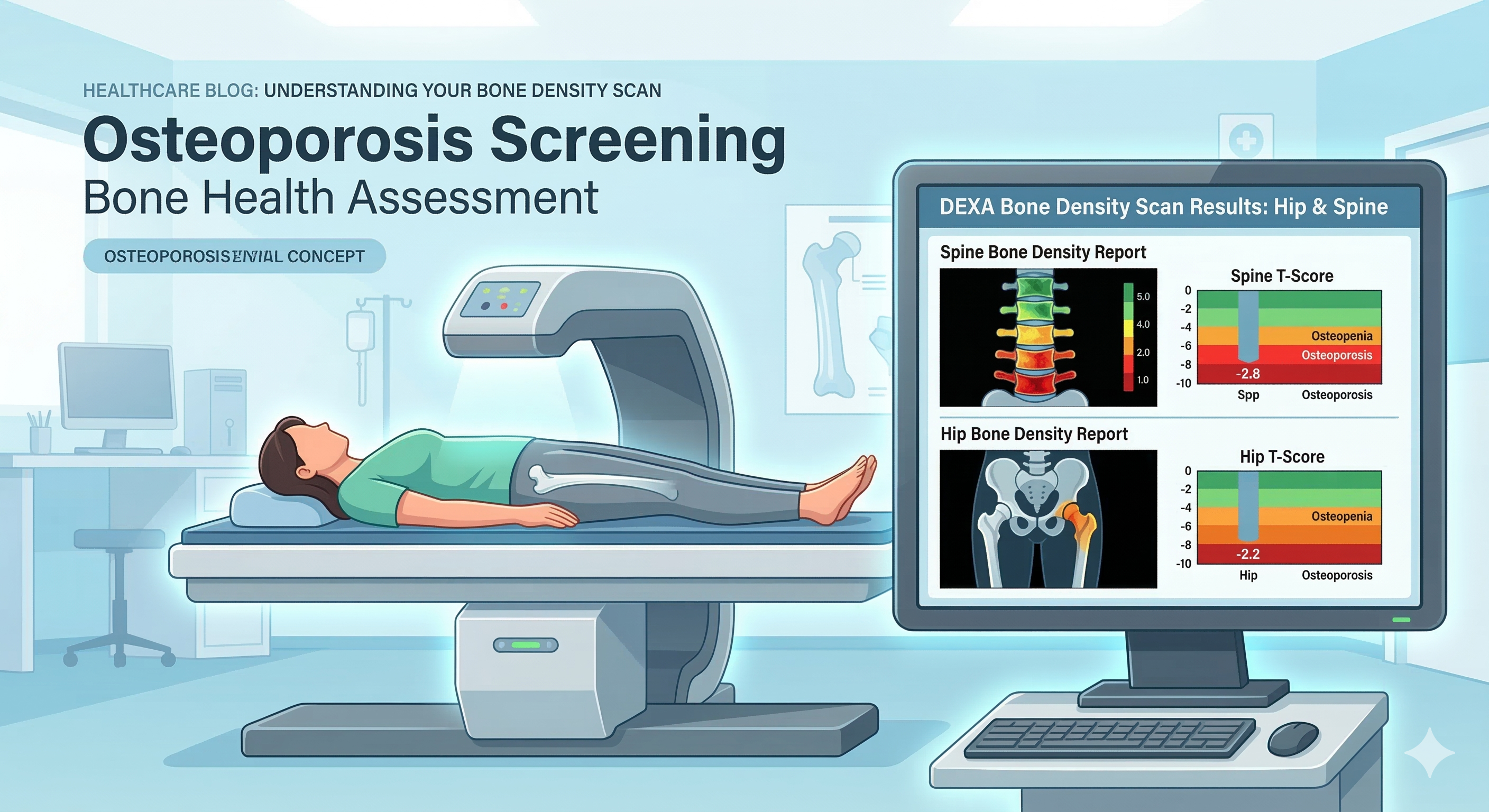

Osteoporosis often develops quietly, without noticeable symptoms in the early stages. By the time a person experiences a fracture, significant bone loss may already have occurred. This is one reason osteoporosis screening and bone density testing can be important for people who are at increased risk.
A DXA or DEXA scan is commonly used to measure bone mineral density and assess bone health. When this test is ordered for screening, healthcare providers and medical coders need to document the reason for the encounter correctly.
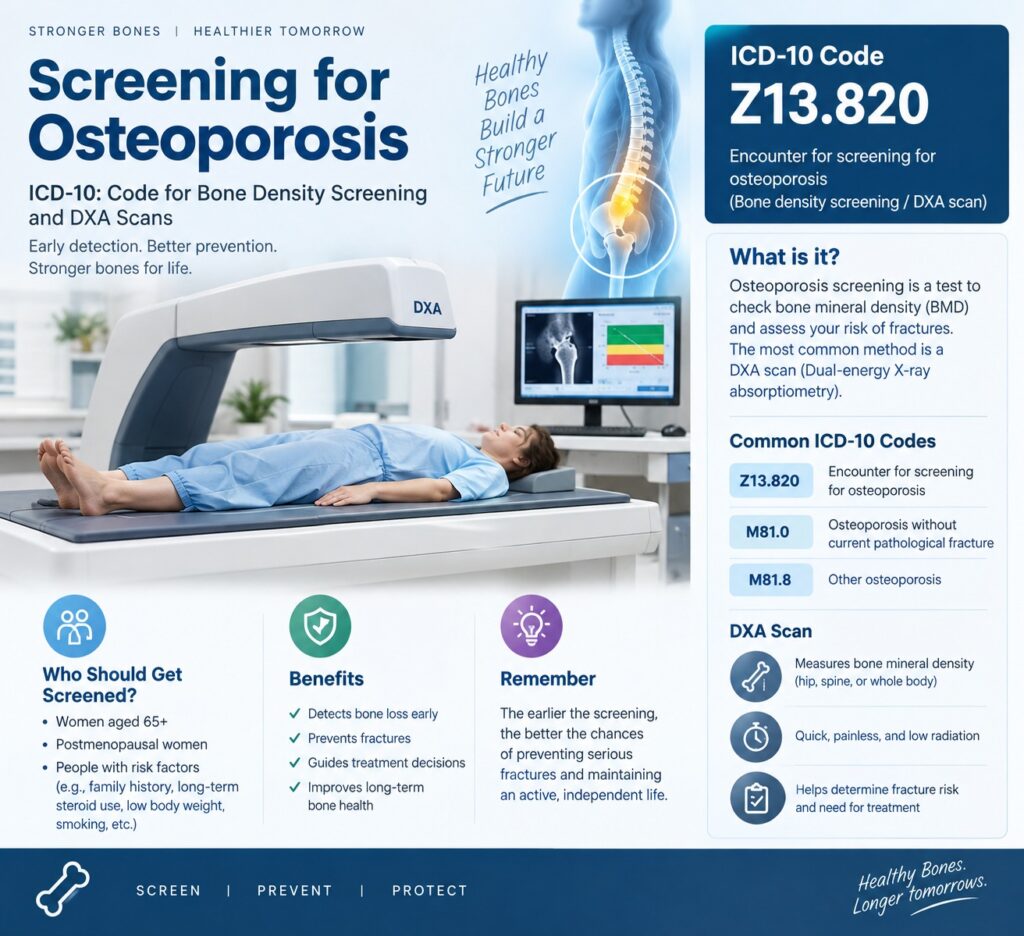
The ICD-10-CM code most directly associated with an encounter for osteoporosis screening is Z13.820 – Encounter for screening for osteoporosis. However, the appropriate diagnosis code can vary when a bone density test is being performed because of an existing condition, symptoms, risk factors, or treatment monitoring.
Understanding the difference between a screening diagnosis code and a diagnostic indication can help prevent confusion when reviewing medical records, claims, or billing information.
Quick Answer
The ICD-10-CM code for an encounter specifically for osteoporosis screening is Z13.820 – Encounter for screening for osteoporosis.
A DXA scan itself is a procedure, so it is reported with a CPT or HCPCS code rather than an ICD-10-CM diagnosis code. For example, CPT 77080 is used for certain DXA bone density studies of the axial skeleton.
The diagnosis code should match the reason the test was ordered and the information documented by the healthcare provider.
What Is the ICD-10 Code for Osteoporosis Screening?
The ICD-10-CM code used for an encounter specifically intended for osteoporosis screening is Z13.820 – Encounter for screening for osteoporosis.
This code identifies the reason for the healthcare encounter rather than describing the bone density test itself. It is used when the purpose of the encounter is to screen for osteoporosis rather than to diagnose or manage an already established bone disorder.
Z13.820 – Encounter for Screening for Osteoporosis
Z13.820 falls under the ICD-10-CM category for encounters involving screening for certain diseases and disorders.
In simple terms, it tells the payer or medical record that the patient is being evaluated specifically for osteoporosis screening.
For example, a healthcare provider may order a bone density test as part of osteoporosis screening for a patient who does not have an established osteoporosis diagnosis. When supported by the documentation, Z13.820 may be used as the diagnosis code for the screening encounter.
Does Z13.820 Mean the Patient Has Osteoporosis?
No Z13.820 does not mean that osteoporosis has been diagnosed. It indicates that the patient is having an encounter for screening.
This distinction is important because screening and diagnosis are not the same thing. A screening test is intended to look for a condition, while diagnostic testing is generally performed because there is already a clinical concern, finding, symptom, or known condition that needs evaluation.
What Does Z13.820 Mean?
The wording of the code is “Encounter for screening for osteoporosis.”
Each part of the description is useful when understanding how the code is used.
Encounter
In ICD-10-CM terminology, an encounter refers to a healthcare visit or interaction for which a diagnosis or reason for the service is being reported.
Screening
Screening generally means testing a person who does not have a confirmed diagnosis of the condition being screened for, with the goal of detecting the condition early.
Osteoporosis
Osteoporosis is a condition characterized by reduced bone strength and an increased risk of fractures. Bone density testing can help identify people with low bone density and assist healthcare providers in assessing fracture risk.
Which Code Is Used for a DXA or DEXA Scan?
A common point of confusion is whether a DXA scan has an “ICD-10 code.” Technically, the ICD-10-CM code describes the diagnosis or reason for the service, while the procedure itself is generally reported using a CPT or HCPCS code.
ICD-10-CM Diagnosis Code
For osteoporosis screening, Z13.820 can describe the screening indication when appropriate.
The diagnosis code answers a question such as:
“Why is this patient receiving this service?”
CPT Procedure Code
The CPT code describes the actual medical service or procedure performed.
For example, CPT 77080 is used for a DXA bone density study involving one or more sites of the axial skeleton, depending on the service provided.
The procedure code answers a different question:
“What service was performed?”
Why Both Codes Matter
A claim may contain both diagnosis and procedure information. The diagnosis supports the medical reason for the service, while the procedure code identifies what was performed.
This is why searching for an “ICD-10 code for a DEXA scan” can be confusing. There is not one ICD-10 code that simply means “DEXA scan.” The appropriate diagnosis code depends on why the test was performed.
Screening vs. Diagnostic Bone Density Testing
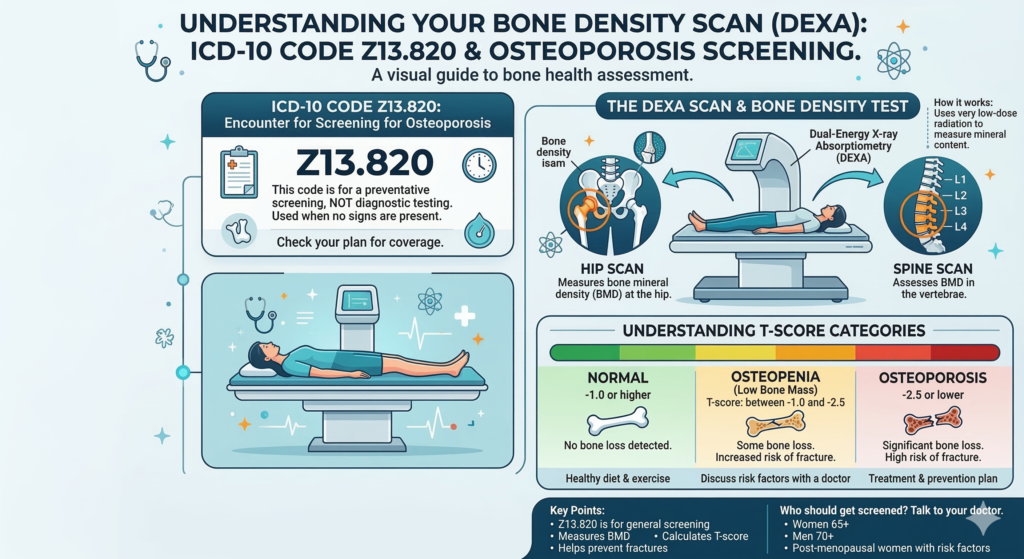
Not every bone density test is performed as a screening test.
The distinction between screening and diagnostic testing is important for accurate coding and billing.
When a DXA Scan Is Used for Screening
A bone density test may be considered a screening service when it is being performed to check for osteoporosis in a person without an established osteoporosis diagnosis.
When the encounter is specifically for osteoporosis screening, Z13.820 may be appropriate when supported by the documentation.
When a DXA Scan Is Used for Diagnostic Evaluation
A DXA scan may also be ordered because the patient has an existing medical condition, a previous fracture, low bone density, medication-related risk, or another clinical concern.
In these situations, the appropriate diagnosis may be different from a screening code.
The diagnosis should reflect the actual reason documented by the healthcare provider.
Why the Difference Matters
Using a screening code when the service is actually being performed for an established condition can create a mismatch between the medical record and the claim.
The same is true in reverse. A disease diagnosis should not be selected simply because a patient is receiving a bone density test if the actual encounter is for screening.
How Medicare Handles Bone Density Screening
Medicare coverage for bone mass measurement is based on specific coverage rules and eligibility requirements.
A qualifying bone mass measurement may be covered when the patient meets applicable Medicare requirements. Coverage is not determined by the ICD-10 code alone.
Medicare Bone Density Testing
Medicare recognizes bone mass measurement services that can help quantify bone mineral density or detect bone loss.
Depending on the circumstances, covered testing may include DXA and certain other bone measurement techniques.
Does Medicare Automatically Cover Every DEXA Scan?
No, Having an osteoporosis screening diagnosis code does not automatically guarantee Medicare payment.
Coverage can depend on factors such as the patient’s clinical circumstances, eligibility, frequency of testing, the service performed, and the applicable Medicare coverage policy.
Medicare Diagnosis Code for a DXA Scan
There is no single diagnosis code that guarantees Medicare coverage for every DXA scan.
The diagnosis reported should accurately describe the reason for the test and be supported by the patient’s medical record.
For Medicare claims, healthcare providers should also review the applicable current Medicare coverage requirements.
What Documentation Is Needed?
Accurate documentation helps support the diagnosis and procedure codes submitted for a bone density test.
Reason for Ordering the Test
The medical record should explain why the healthcare provider ordered the bone density study.
For a screening encounter, the documentation should support that the purpose is osteoporosis screening.
Relevant Medical History
When applicable, the provider may document relevant medical history, previous fractures, medications, existing bone conditions, or other factors that contribute to the clinical reason for testing.
Existing Osteoporosis or Osteopenia
If the patient already has osteoporosis or osteopenia, that information should be documented clearly.
A patient with an established bone condition may require evaluation or monitoring rather than routine screening, which can affect the diagnosis coding.
Common Coding Mistakes to Avoid
Medical coding mistakes can happen when diagnosis codes and procedure codes are treated as if they mean the same thing.
Using Z13.820 for Every DXA Scan
A DXA scan does not automatically mean the encounter is for osteoporosis screening.
The reason for the test should be reviewed before selecting Z13.820.
Confusing ICD-10 With CPT
ICD-10-CM codes identify diagnoses or reasons for encounters.
CPT codes identify medical procedures and services.
For example, Z13.820 and 77080 are not interchangeable because they describe different parts of the claim.
Assuming the Code Guarantees Insurance Coverage
An appropriate diagnosis code does not guarantee that an insurance company or Medicare will pay for the service.
Coverage requirements should always be checked with the applicable payer.
Ignoring the Provider’s Documentation
Coding should be based on what is documented in the medical record.
A coder should not select a diagnosis simply because it seems likely or because it is commonly associated with a particular test.
Practical Tips for Accurate Coding
Correct coding becomes easier when the diagnosis, clinical reason, and procedure are considered together.
Identify the Purpose of the Test
First determine whether the DXA scan is being performed for screening, diagnosis, evaluation, or monitoring.
Review the Medical Record
Check the provider’s documentation for existing diagnoses, relevant history, risk factors, and the reason the test was ordered.
Match the Diagnosis to the Service
The diagnosis code should make sense in relation to the procedure performed and should accurately represent the clinical reason documented by the provider.
Check Current Payer Rules
Medicare and private insurers may have different requirements. Always verify the current payer policy rather than relying on an older coding reference.
When to Contact a Healthcare or Billing Professional
Questions about osteoporosis screening codes can become more complicated when a patient has several medical conditions or when the test is being performed for a reason other than routine screening.
For Coding or Billing Questions
A medical coder, billing professional, or healthcare provider can review the documentation and determine which diagnosis and procedure codes are supported.
For Questions About the Need for a DXA Scan
Patients should speak with their healthcare provider if they want to know whether a DXA scan is appropriate for them.
The decision to order a bone density test should be based on the individual’s health history, risk factors, age, and clinical situation rather than on a diagnosis code alone.
Frequently Asked Questions
What is the ICD-10 code for screening for osteoporosis?
The ICD-10-CM code is Z13.820 – Encounter for screening for osteoporosis.
What is the ICD-10 code for bone density screening?
For an encounter specifically for osteoporosis screening, Z13.820 is the applicable ICD-10-CM code.
What is the ICD-10 code for a DEXA scan?
A DEXA scan is a procedure, so the scan itself is generally reported using a CPT or HCPCS procedure code. The ICD-10-CM code identifies the diagnosis or reason for the test.
For example, Z13.820 may be used when the encounter is specifically for osteoporosis screening.
What is the CPT code commonly used for a DXA scan?
CPT 77080 is commonly used for a DXA bone density study of one or more sites of the axial skeleton.
The exact procedure code should correspond to the service actually performed.
Is Z13.820 a diagnosis of osteoporosis?
No. Z13.820 is a screening code. It indicates an encounter for screening for osteoporosis and does not establish that the patient has osteoporosis.
Does Medicare cover a DXA scan?
Medicare may cover qualifying bone mass measurement services when applicable requirements are met. Coverage depends on the patient’s circumstances and Medicare’s current coverage rules.
Can Z13.820 be used for every bone density test?
No. The appropriate diagnosis depends on why the test was ordered. If the test is being performed because of an existing condition or another clinical indication, a different diagnosis code may be more appropriate.
What is the difference between a screening DXA and a diagnostic DXA?
A screening DXA is performed to look for low bone density or osteoporosis in someone without an established diagnosis. A diagnostic DXA may be performed because of an existing condition, clinical finding, fracture history, medication-related risk, or another documented reason.
Conclusion
The ICD-10-CM code Z13.820 – Encounter for screening for osteoporosis is the key code used when the healthcare encounter is specifically for osteoporosis screening.
It is important to remember that an ICD-10-CM diagnosis code and a DXA procedure code serve different purposes. The diagnosis code explains the reason for the service, while the CPT or HCPCS code identifies the procedure performed.
For patients undergoing bone density testing, the correct coding depends on the actual clinical reason documented by the healthcare provider. Screening, diagnostic evaluation, and monitoring of an existing condition should not automatically be coded in the same way.
When Medicare or another insurance payer is involved, current coverage and documentation requirements should also be reviewed. Accurate coding ultimately starts with clear clinical documentation and matching the reported codes to the service and reason for care.
Related Health Guides
Maintaining strong bones is only one part of overall health. Nutrition and digestive wellness also play an important role in preventing long-term health conditions. If you are interested in improving your diet and health naturally, you may also find these guides helpful:
Author
Monali Singh is a health content researcher who writes about wellness, digestive health, dental care, and nutrition. She focuses on simplifying complex health topics so readers can make informed health decisions.