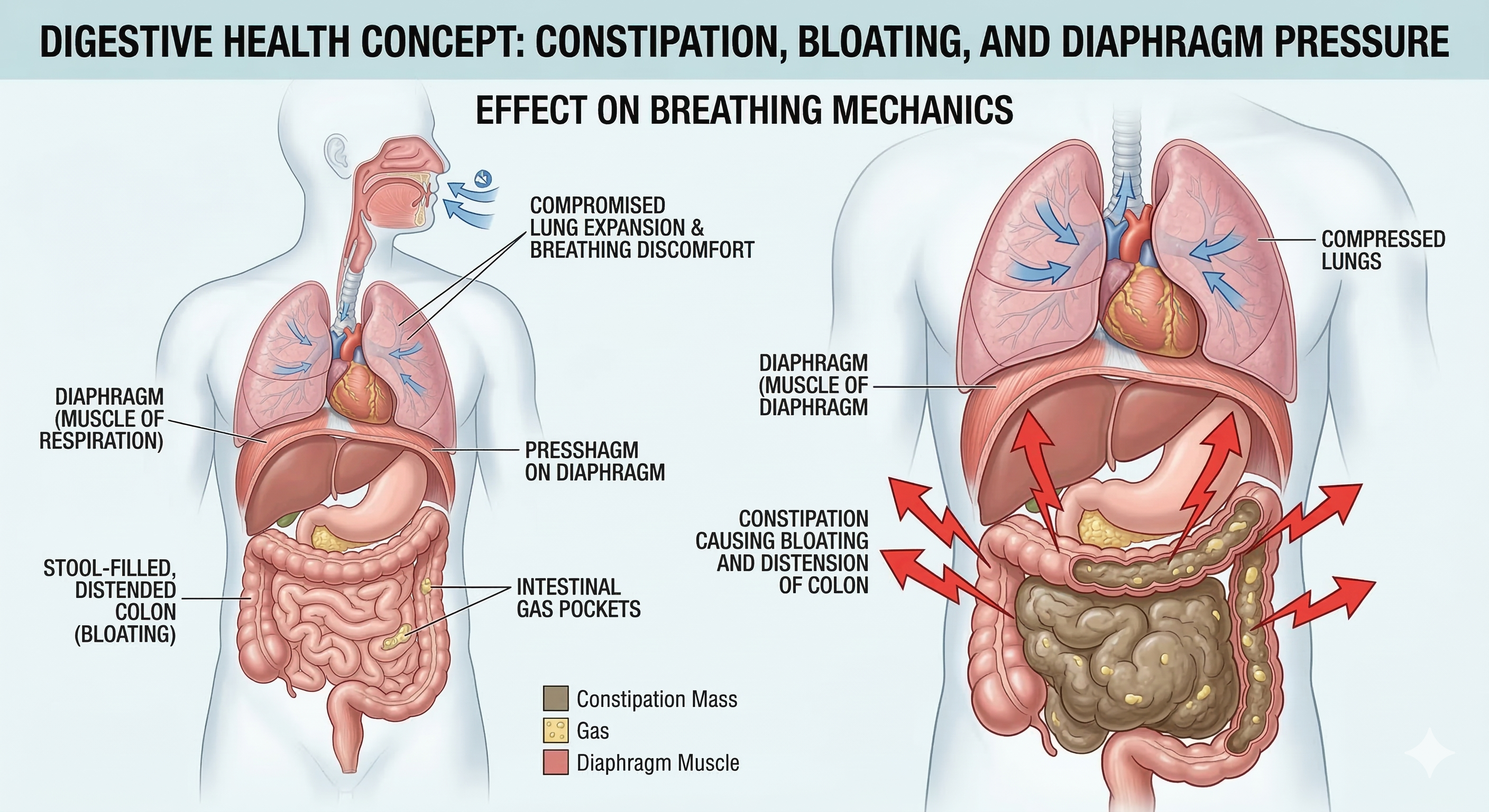

Constipation is usually thought of as a digestive problem. Hard or dry stools, fewer bowel movements, difficulty passing stool, bloating, and abdominal discomfort are some of the symptoms people commonly notice. But when constipation becomes uncomfortable, some people may also notice pressure or discomfort higher up in the abdomen, which can make them wonder whether it is related to the chest.
This can leave you wondering, can constipation cause chest pain?
The connection is not always straightforward. Constipation can occur with bloating and trapped gas, and these digestive symptoms can create pressure or fullness in the abdomen. Because the upper abdomen sits close to the lower chest, the discomfort may sometimes be perceived higher up.
However, chest pain should not automatically be blamed on constipation. Chest discomfort can have many different causes, and some require prompt medical attention. Understanding the difference can help you avoid overlooking symptoms that need proper evaluation.
Quick Answer
Constipation does not usually cause chest pain directly. However, constipation may be accompanied by bloating, trapped gas, and abdominal pressure that can sometimes contribute to discomfort around the upper abdomen or lower chest.
If chest pain is severe, persistent, unexplained, or accompanied by significant shortness of breath, fainting, dizziness, unusual sweating, nausea, weakness, or pain spreading to the arm, back, neck, or jaw, do not assume constipation is the cause. Seek appropriate medical attention.
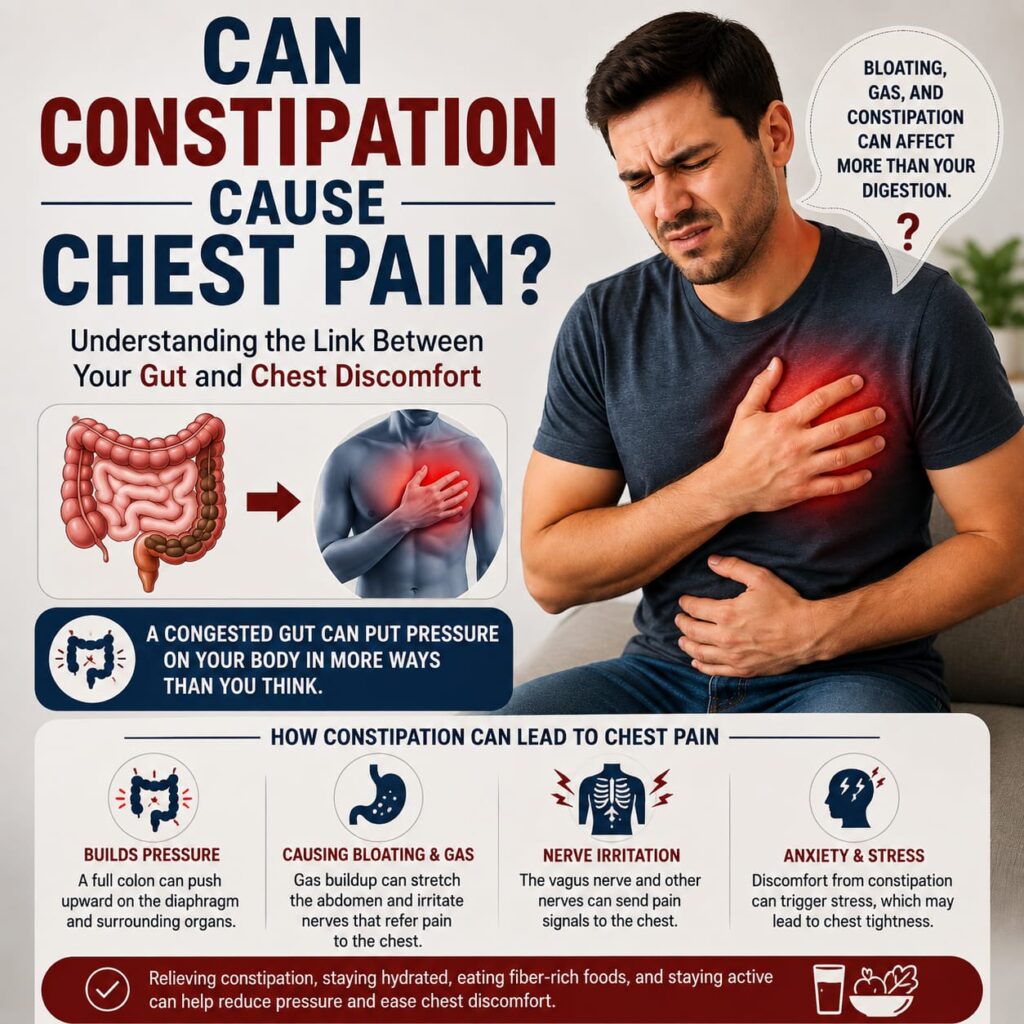
Constipation and chest discomfort can sometimes occur together
Constipation may be accompanied by bloating, gas, and abdominal pressure. When these symptoms are significant, the resulting discomfort may sometimes be felt higher in the abdomen or around the lower chest.
Constipation is not usually a direct cause of chest pain
The digestive pressure associated with constipation may contribute to discomfort, but that does not mean constipation itself is causing pain in the chest.
Severe bloating may make deep breathing uncomfortable
A very full or distended abdomen can sometimes make taking a deep breath uncomfortable. This is different from significant shortness of breath, which should be evaluated separately.
Chest pain should not be judged by location alone
Left-sided, right-sided, or central chest pain can have different causes. The location alone cannot reliably tell you whether the discomfort is digestive.
Some chest symptoms need prompt attention
Chest pain together with significant breathing difficulty, fainting, unusual sweating, or pain spreading to the arm, back, neck, or jaw should not simply be attributed to constipation.
Can Constipation Cause Chest Pain, Chest Discomfort, or Shortness of Breath?
Constipation does not usually cause chest pain or shortness of breath directly. Most constipation symptoms occur in the digestive system and include hard stools, difficulty passing stool, abdominal discomfort, bloating, and a feeling that the bowel has not completely emptied.
However, constipation can sometimes occur with significant bloating and trapped gas. When the abdomen becomes very full or distended, you may feel pressure or discomfort in the upper abdomen, which can sometimes seem close to the lower chest.
Severe bloating may also make taking a deep breath feel uncomfortable because the abdomen feels stretched or pressured. This is different from true shortness of breath, where you feel unable to breathe normally or are struggling to get enough air.
If you are genuinely short of breath, especially if it occurs with chest pain, dizziness, fainting, sweating, nausea, or weakness, do not assume constipation is responsible. Chest pain accompanied by shortness of breath or other concerning symptoms needs prompt medical attention.
Why Can Constipation Create Pressure That Feels Higher Up?
When stool moves slowly through the bowel, it can be accompanied by bloating, abdominal fullness, and gas. The abdomen may feel stretched or uncomfortable, particularly when constipation has lasted for some time.
Gas itself can create pressure, fullness, cramping, or a feeling of distension. Because the upper abdomen lies directly beneath the chest, digestive discomfort in this area may sometimes be perceived as pressure closer to the chest.
Can bloating make your chest feel full or tight?
Significant bloating can create a sensation of fullness or pressure rather than a sharp pain. You may notice that your stomach feels swollen, your clothes feel tighter, or bending and sitting become uncomfortable.
If the sensation settles as the bloating improves or after passing gas or having a bowel movement, digestive pressure may have contributed to the discomfort. However, this pattern by itself cannot confirm the cause of chest pain.
Can Trapped Gas From Constipation Feel Like Chest Pain?
Trapped gas can sometimes create pressure, cramping, fullness, or discomfort that feels higher up in the abdomen. When constipation is present, gas may become more noticeable because bowel movements are less regular and the digestive system may feel more distended.
Gas-related discomfort can sometimes change with movement or after passing gas. This may make it tempting to assume that any chest discomfort is simply gas.
However, chest pain should not be diagnosed based only on whether it changes after passing gas. Mayo Clinic specifically advises seeking immediate care for gas or gas pain accompanied by chest pain.
Can Constipation Cause Left-Sided Chest Pain?
Left-sided chest pain can naturally cause concern because chest pain in this area can have several possible causes.
Constipation-related gas or abdominal pressure may sometimes be felt in different areas, including higher in the abdomen. But the location of the discomfort cannot reliably establish that constipation is responsible.
If left-sided chest pain is new, severe, persistent, or occurs together with shortness of breath, dizziness, fainting, unusual sweating, nausea, weakness, or pain spreading to the arm, back, neck, or jaw, seek prompt medical attention rather than assuming it is digestive.
Can Constipation Cause Coughing or Chest Tightness?
Constipation itself does not normally cause coughing. However, significant abdominal bloating may make coughing, bending, or taking a deep breath feel uncomfortable because of pressure in the abdomen.
There can also be another condition occurring at the same time. For example, reflux or a respiratory problem may cause coughing or chest discomfort while constipation happens separately.
Why might coughing and constipation happen at the same time?
Having constipation and coughing together does not necessarily mean that one is causing the other.
Changes in diet, routine, hydration, illness, or another digestive or respiratory condition can cause symptoms to overlap. If coughing continues, becomes severe, or occurs with chest pain or breathing difficulty, it should be evaluated rather than automatically attributed to constipation.
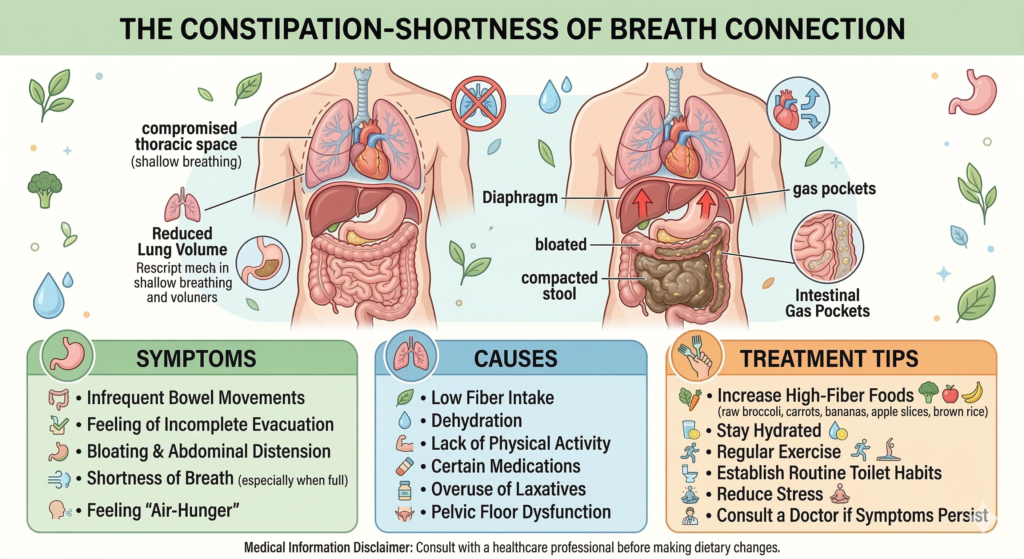
What Can You Do to Relieve Constipation-Related Discomfort?
If you have mild constipation with bloating and do not have concerning chest or breathing symptoms, improving bowel regularity may help reduce some of the abdominal discomfort.
The focus should be on simple measures that support normal bowel movements rather than trying to force a bowel movement quickly.
Drink enough fluids
Adequate fluid intake can help keep stools softer and make them easier to pass. If you are increasing your fiber intake, drinking enough fluids is particularly important because fiber works better when there is adequate fluid available.
Rather than suddenly drinking very large amounts, maintain regular fluid intake throughout the day. Individual needs can vary depending on factors such as activity, climate, and health conditions.
Increase fiber gradually
Fiber can help support regular bowel movements. Fruits, vegetables, whole grains, beans, lentils, and other fiber-rich foods can be useful choices.
The key is to increase fiber gradually. A sudden large increase can cause more gas and bloating, which may make you feel worse rather than better.
Stay gently active
Regular physical activity can support normal bowel function and may also help you feel less uncomfortable when you are bloated.
Simple activities such as walking can be a practical way to add movement to your routine. You do not need to exercise intensely just to relieve ordinary constipation.
Do not repeatedly ignore the urge to pass stool
Regularly delaying a bowel movement can make constipation harder to manage.
When you feel the natural urge to use the bathroom, try to respond rather than repeatedly putting it off. Giving yourself enough time and maintaining a regular bathroom routine can also help support more consistent bowel habits.
What Should You Avoid When You Have Constipation and Chest Pain?
The most important thing to avoid is assuming that every episode of chest discomfort is caused by constipation.
Even when you clearly have constipation, the chest symptoms may have a completely different cause. Treating the constipation while ignoring unexplained chest pain can delay appropriate evaluation.
Do not keep treating unexplained chest pain as gas
If chest discomfort continues, becomes stronger, or feels unusual, repeatedly trying to relieve it as gas may not be appropriate.
Gas can cause abdominal pressure and discomfort, but chest pain has many possible causes. Persistent or unexplained chest discomfort should be assessed rather than repeatedly self-treated as digestive gas.
Do not suddenly overload your diet with fiber
Although fiber can help constipation, adding a large amount all at once may increase gas and bloating.
A gradual increase is generally easier for the digestive system to tolerate. If constipation is persistent or severe, discuss the appropriate approach with a healthcare professional.
Do not use multiple constipation products without guidance
Taking several constipation medicines or changing doses on your own is not a reliable way to determine whether chest discomfort is related to constipation.
Some laxatives can themselves cause effects such as gas, bloating, or cramping. If you think you need a laxative, ask a healthcare professional which type is appropriate for you.
When Is Chest Pain Too Serious to Blame on Constipation?
This is one of the most important parts of understanding constipation and chest pain.
Digestive problems can sometimes create pressure or discomfort, but chest pain can also occur with conditions that require urgent medical attention. The safest approach is not to assume the cause based only on the fact that you are constipated.
Sudden or severe chest pain
Chest pain that begins suddenly, is severe, or does not settle should not automatically be blamed on constipation.
Even if you are also experiencing bloating or constipation, the chest symptoms deserve separate attention.
Chest pain with breathing difficulty
Chest pain together with significant shortness of breath is a warning sign.
If you are struggling to breathe or cannot catch your breath normally, seek urgent medical attention rather than waiting for the constipation or bloating to improve.
Chest pain with dizziness, fainting, or unusual sweating
Chest discomfort accompanied by feeling faint, losing consciousness, unusual sweating, nausea, or marked weakness should not simply be dismissed as gas.
These symptoms can occur with serious conditions and require prompt assessment.
Pain spreading to another part of the upper body
Chest pain that spreads to the arm, shoulder, back, neck, or jaw can be concerning.
If this happens, particularly together with breathing difficulty or other warning symptoms, seek urgent medical attention.
Frequently Asked Questions
Can constipation cause chest pain?
Constipation does not usually cause chest pain directly. However, constipation can be accompanied by bloating, trapped gas, and abdominal pressure, which may sometimes create discomfort around the upper abdomen or lower chest.
Because chest pain can have many causes, persistent or unexplained discomfort should not automatically be attributed to constipation.
Can constipation cause chest discomfort or pressure?
Yes, constipation-related bloating and trapped gas may sometimes create pressure or fullness that is felt higher in the abdomen and can seem close to the lower chest.
However, chest discomfort that is severe, persistent, or unusual should be evaluated rather than assumed to be digestive.
Can constipation cause shortness of breath?
Constipation does not normally cause true shortness of breath. Severe abdominal bloating may make deep breathing uncomfortable because the abdomen feels very full or distended.
If you are genuinely struggling to breathe, especially with chest pain or dizziness, seek prompt medical attention.
Can severe constipation affect breathing?
Severe abdominal distension may make taking a deep breath feel uncomfortable. This can happen because of pressure and fullness in the abdomen rather than a direct effect on the lungs.
Significant breathing difficulty, however, should not be considered a normal constipation symptom.
Can trapped gas from constipation feel like chest pain?
Trapped gas can cause pressure, fullness, or discomfort that may be felt higher in the abdomen. When constipation is present, these sensations may become more noticeable.
However, chest pain should not be diagnosed as gas simply because it improves after passing gas.
Can constipation cause left-sided chest pain?
Constipation-related gas or abdominal pressure may sometimes cause discomfort in different areas, but left-sided chest pain should not automatically be blamed on constipation.
New, severe, persistent, or unexplained left-sided chest pain deserves appropriate medical evaluation.
Can constipation cause coughing?
Constipation itself does not normally cause coughing. Coughing and constipation can happen at the same time because of separate digestive or respiratory problems.
If coughing continues or occurs with chest pain or breathing difficulty, it should be assessed separately.
If the discomfort is mild and clearly occurs with constipation-related bloating, focus on improving bowel regularity through adequate fluids, gradually increasing fiber, gentle activity, and responding to the urge to have a bowel movement.
However, do not use these measures as a substitute for evaluating unexplained chest pain.
There is no fixed duration because the sensation depends on what is causing the discomfort. If bloating and gas are contributing, the pressure may improve as the digestive symptoms settle.
If chest discomfort continues, becomes worse, or keeps returning, it should not simply be assumed to be constipation.
When should I see a doctor for constipation?
Constipation that does not improve with self-care, keeps returning, or is accompanied by symptoms such as persistent abdominal pain, vomiting, fever, blood in the stool, or inability to pass gas needs medical attention.
Yes. A person can have constipation and chest pain at the same time without constipation being the cause of the chest symptoms.
That is why the presence of constipation should not be used to automatically explain new or unexplained chest pain.
Read More:
7-Day Meal Plan for Ulcerative Colitis
Conclusion
Constipation can be uncomfortable and may lead to bloating, trapped gas, abdominal fullness, and pressure. In some situations, this digestive discomfort may be felt higher in the abdomen and can seem close to the lower chest.
However, constipation is not usually a direct cause of chest pain or significant shortness of breath. The important thing is to look at the complete pattern of symptoms rather than assuming that constipation explains everything.
If you have mild constipation with bloating, simple measures such as adequate fluids, gradually increasing fiber, staying gently active, and maintaining a regular bathroom routine may help improve bowel regularity.
But if chest pain is severe, persistent, unexplained, or accompanied by breathing difficulty, fainting, dizziness, unusual sweating, nausea, weakness, or pain spreading to other areas of the upper body, seek prompt medical attention.
Author
Monali Singh is a health content researcher who writes about wellness, digestive health, dental care, and nutrition. She focuses on simplifying complex health topics so readers can make informed health decisions.